Sorrow as a ladder to God
A Lament
"Builds ladders to be nearer God."
Poem
Αἴλινον, αἴλινον εἰπέ, τὸ δ’ εὖ νικάτω
O well for him who lives at easeWith garnered gold in wide domain,Nor heeds the splashing of the rain,The crashing down of forest trees.
O well for him who ne’er hath knownThe travail of the hungry years,A father grey with grief and tears,A mother weeping all alone.
But well for him whose foot hath trodThe weary road of toil and strife,Yet from the sorrows of his lifeBuilds ladders to be nearer God.
In brief
SummaryA short lament in three quatrains, headed by a Greek line that cries out in sorrow yet asks that the good may prevail. The first two stanzas count the fortune of the man who lives at ease with 'garnered gold', deaf to storm and falling trees, and who has never known hunger or seen his parents grieve. The third answers them with a harder blessing: it is well for the man who has walked 'The weary road of toil and strife', because from the sorrows of his life he 'Builds ladders to be nearer God'.
Key themes
"O well for him who lives at ease"
Related works
Explore more of Wilde's writing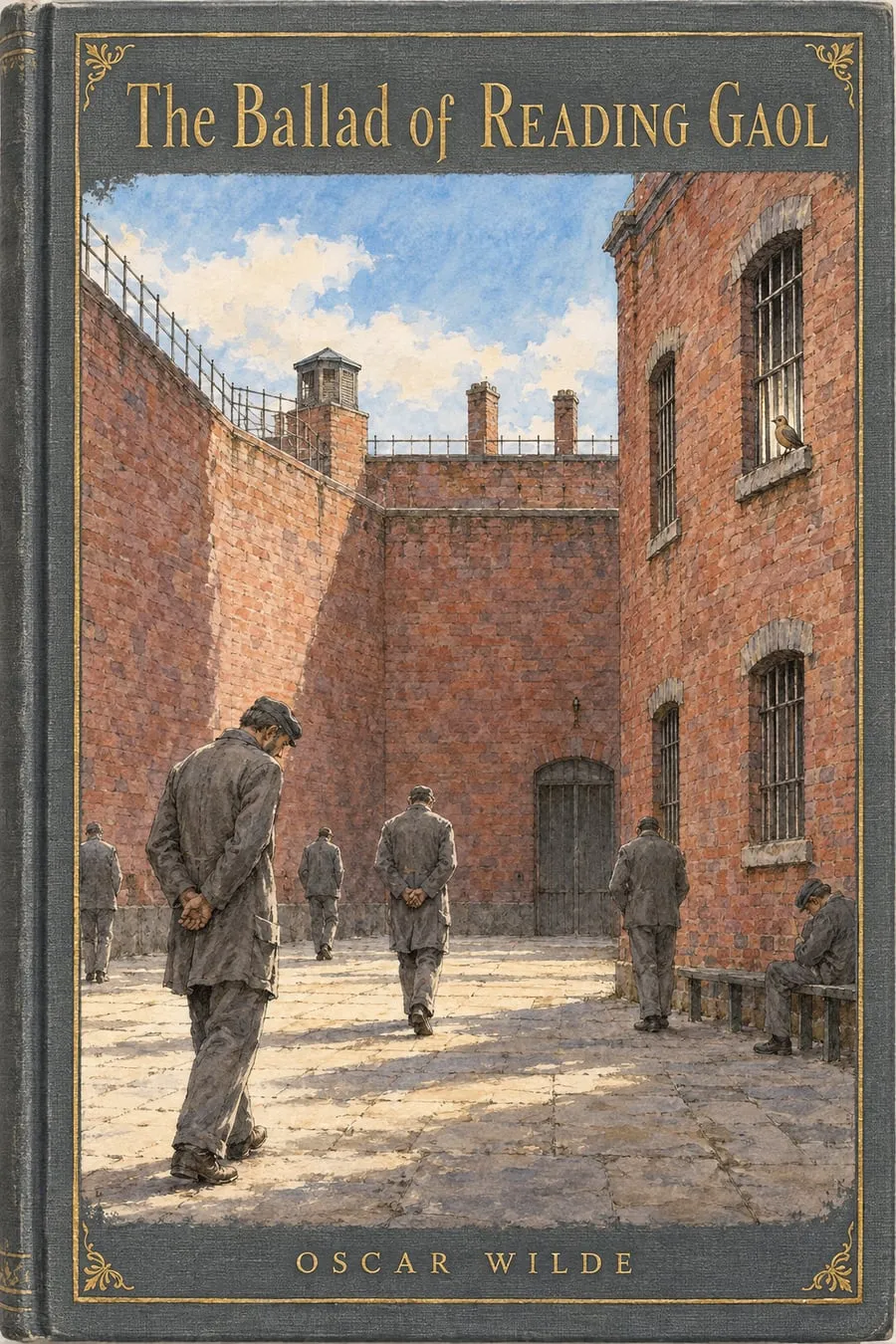 The Ballad of Reading GaolWritten after his release from prison, a long ballad about the hanging of a fellow prisoner, a trooper who had killed his wife. Wilde's last work, and his most read poem.Read more
  The SphinxA student in his room questions the ancient sphinx that has watched from its corner for a thousand years, and is frightened by what she knows.Read more
 Summary
The poem opens with a Greek epigraph, a double cry of lament followed by a prayer that the good may win, and the English stanzas follow the same movement from sorrow to hope. The first stanza praises the fortune of the man 'who lives at ease / With garnered gold in wide domain', who need not heed 'the splashing of the rain' or 'The crashing down of forest trees'. The second praises the man who has never known 'The travail of the hungry years', nor a father 'grey with grief and tears', nor 'A mother weeping all alone'.
The third stanza turns on the word 'But'. It is well, too, for the man whose foot has trodden 'The weary road of toil and strife', because he makes something of his hardship: 'from the sorrows of his life' he 'Builds ladders to be nearer God'. The comfort of the rich and the sheltered is set against a blessing earned through suffering, and the poem's last word, 'God', gives the sufferer the higher reward.
Themes
Ease and hardship
The first two stanzas describe a life shut off from pain: gold 'garnered' on a wide estate, no care for 'the splashing of the rain', no memory of 'the hungry years' or of parents in grief. The poem does not mock this ease; it simply calls it 'well'. Its weight lies in what such a life lacks, which the third stanza supplies.
Suffering as ascent
The last stanza turns sorrow into a way of rising. The man who walks 'The weary road of toil and strife' does not escape his grief but builds with it: 'from the sorrows of his life / Builds ladders to be nearer God'. The image answers the Greek epigraph, which cries out in sorrow but asks that the good prevail.
Quotes
"O well for him who lives at ease"
The poem
"A mother weeping all alone."
The poem
Context
The poem's title is 'A Lament', and its Greek epigraph is a repeated cry of mourning that ends with the wish that good may win. It is written in three rhymed quatrains, each built on the phrase 'well for him', and it moves from two stanzas on comfort to one on the rewards of suffering.
About this edition
- Text: the complete work from Standard Ebooks, released into the public domain (CC0 1.0). We change only the layout.
- Download the EPUB of the whole book it comes from, free, for any e-reader.
- Every quotation and glossary word in these notes is checked against the text.