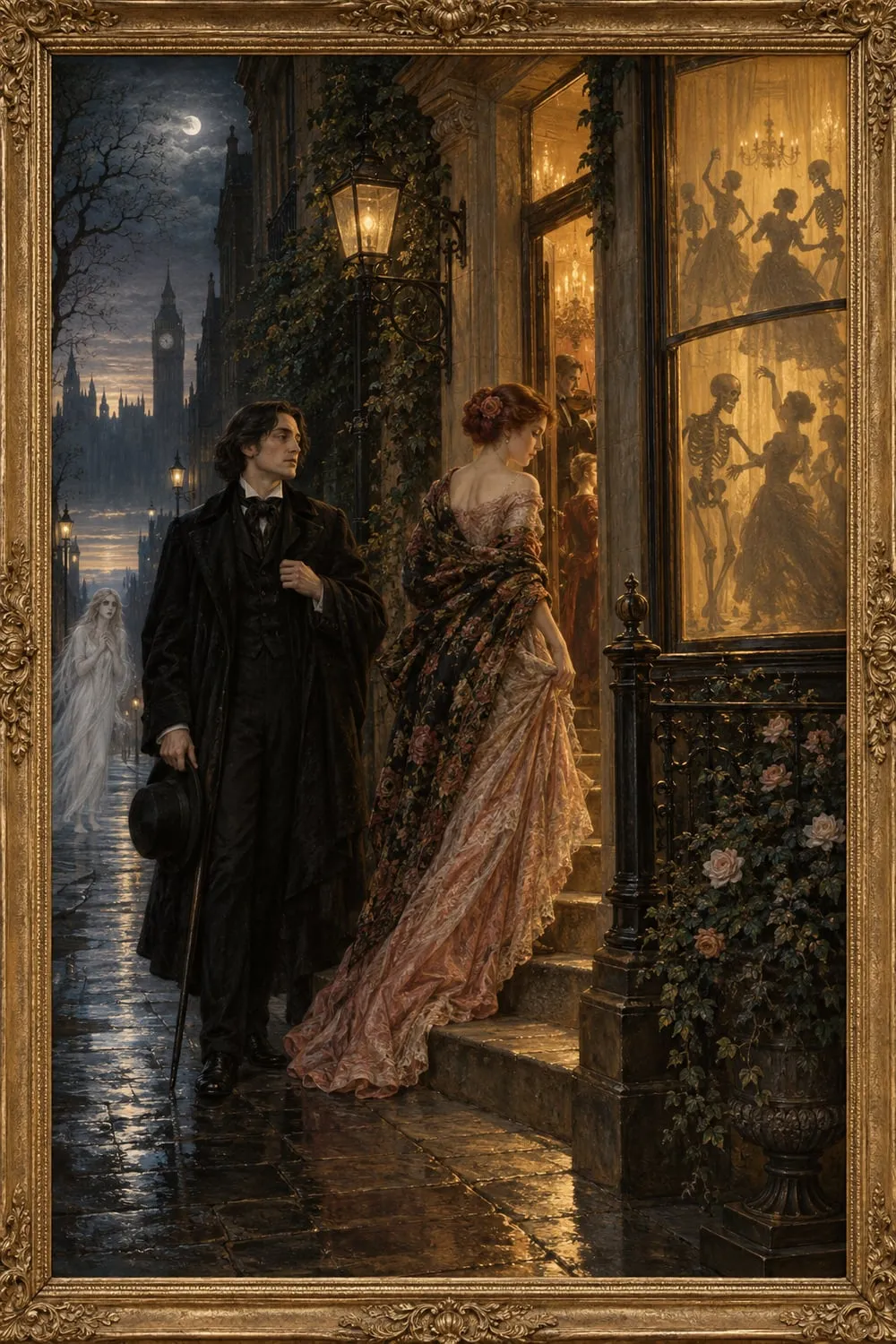
Shadows dancing in a house of lust
The Harlot's House
"Love passed into the house of lust."
Poem
We caught the tread of dancing feet,We loitered down the moonlit street,And stopped beneath the harlot’s house.
Inside, above the din and fray,We heard the loud musicians playThe “Treues Liebes Herz” of Strauss.
Like strange mechanical grotesques,Making fantastic arabesques,The shadows raced across the blind.
We watched the ghostly dancers spinTo sound of horn and violin,Like black leaves wheeling in the wind.
Like wire-pulled automatons,Slim silhouetted skeletonsWent sidling through the slow quadrille,
Then took each other by the hand,And danced a stately saraband;Their laughter echoed thin and shrill.
Sometimes a clockwork puppet pressedA phantom lover to her breast,Sometimes they seemed to try to sing.
Sometimes a horrible marionetteCame out, and smoked its cigaretteUpon the steps like a live thing.
Then, turning to my love, I said,“The dead are dancing with the dead,The dust is whirling with the dust.”
But she—she heard the violin,And left my side, and entered in:Love passed into the house of lust.
Then suddenly the tune went false,The dancers wearied of the waltz,The shadows ceased to wheel and whirl.
And down the long and silent street,The dawn, with silver-sandalled feet,Crept like a frightened girl.
In brief
SummaryThe speaker and his love, walking a moonlit street, stop outside a harlot's house where musicians are playing a waltz by Strauss. Through the blind they watch the dancers' shadows, which look like clockwork puppets, marionettes and skeletons whirling through a quadrille. Turning to his love, the speaker says, 'The dead are dancing with the dead', but she hears the violin, leaves his side and goes in: 'Love passed into the house of lust.' At once the tune goes false, the dancing stops, and dawn creeps down the silent street 'like a frightened girl'.
Key themes
"The dead are dancing with the dead"
Related works
Explore more of Wilde's writing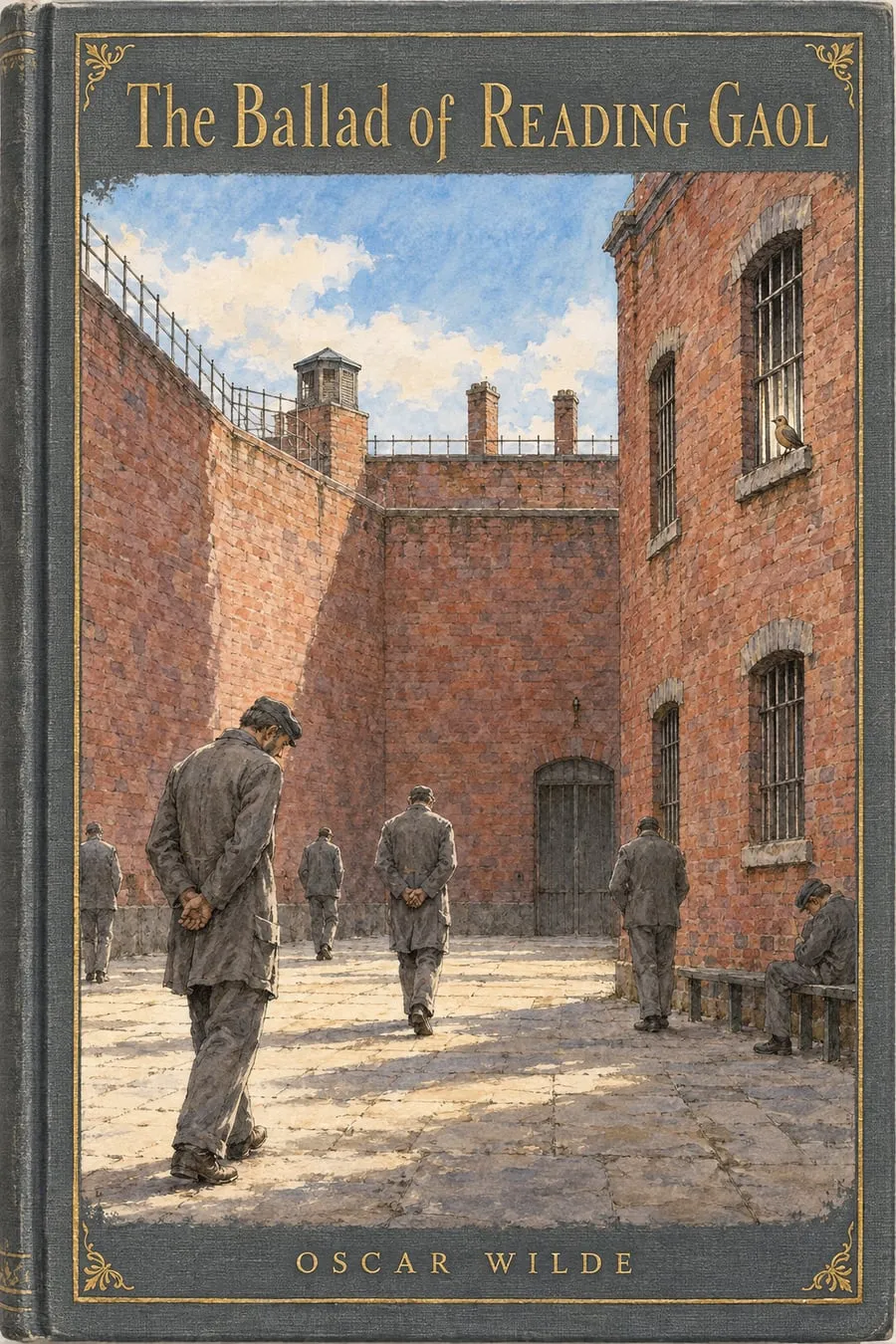 The Ballad of Reading GaolWritten after his release from prison, a long ballad about the hanging of a fellow prisoner, a trooper who had killed his wife. Wilde's last work, and his most read poem.Read more
 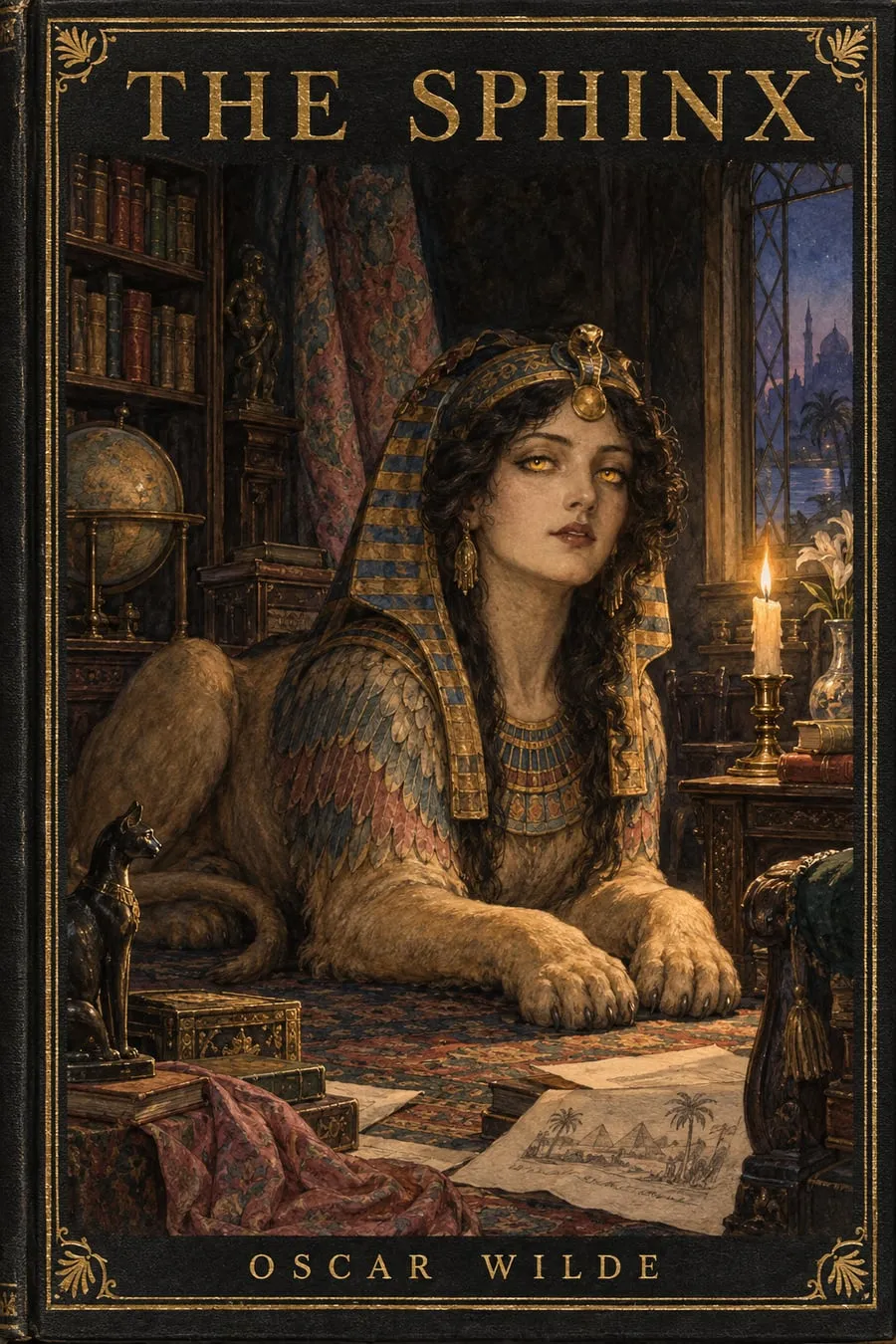 The SphinxA student in his room questions the ancient sphinx that has watched from its corner for a thousand years, and is frightened by what she knows.Read more
 Summary
The speaker and his companion catch 'the tread of dancing feet', loiter down a moonlit street and stop 'beneath the harlot's house'. Inside, above the din, musicians are playing the 'Treues Liebes Herz' of Strauss. The two see nothing directly: they watch shadows racing across the blind 'Like strange mechanical grotesques', and the 'ghostly dancers' spin 'Like black leaves wheeling in the wind'.
The images grow more disturbing. The dancers are 'wire-pulled automatons' and 'Slim silhouetted skeletons' sidling through a slow quadrille, then a stately saraband, their laughter 'thin and shrill'. Sometimes 'a clockwork puppet' presses 'A phantom lover to her breast'; sometimes they seem to try to sing. A 'horrible marionette' comes out and smokes its cigarette on the steps 'like a live thing'.
The speaker turns to his love and passes judgement: 'The dead are dancing with the dead, / The dust is whirling with the dust.' But she hears the violin, 'And left my side, and entered in: / Love passed into the house of lust.' Then 'suddenly the tune went false', the dancers weary of the waltz and the shadows stop. The dawn, 'with silver-sandalled feet', creeps down the long and silent street 'like a frightened girl'.
Characters
The speaker
The watcher in the street
He walks the moonlit street with his love and stops to watch the dancers' shadows on the blind. He sees them as puppets and skeletons and judges them in a single couplet: 'The dead are dancing with the dead.' He stays outside, and watches his love leave him for the house.
His love
Drawn in by the music
She walks and watches beside the speaker until she hears the violin and 'left my side, and entered in'. The poem gives no reason for her choice. Her crossing of the threshold is the moment when 'Love passed into the house of lust'.
The dancers
Shadows on the blind
The figures inside the harlot's house, seen only as shadows. The speaker likens them to automatons, skeletons, a clockwork puppet embracing 'A phantom lover', and a 'horrible marionette' that comes out to smoke on the steps. When the tune goes false they weary of the waltz and stop.
Themes
Lust as living death
The dancers are never allowed to be human. They are 'mechanical grotesques', 'wire-pulled automatons', 'Slim silhouetted skeletons', a 'clockwork puppet' and a 'horrible marionette' that smokes 'like a live thing', which means it is not one. The speaker sums them up in one couplet: 'The dead are dancing with the dead, / The dust is whirling with the dust.' Desire bought and sold empties people into moving shapes.
Love betrayed
The poem turns on a single line: 'Love passed into the house of lust.' The speaker's love, a fellow watcher beside him, is drawn in not by argument but by sound: 'she heard the violin, / And left my side, and entered in'. The halting repetition of 'she' catches his shock. The piece the musicians play has a German title meaning 'true loving heart', which sharpens the irony.
Watching from outside
Everything is seen at one remove, as shadows on a blind, so the house keeps both its mystery and its horror. The two lovers 'loitered' and 'stopped', spectators rather than dancers, until she crosses the threshold. The ending moves outdoors again: the shadows 'ceased to wheel and whirl', and dawn creeps down the street 'like a frightened girl', as if innocence itself were afraid.
Quotes
"The dead are dancing with the dead"
The speaker
"Love passed into the house of lust."
The poem
"Crept like a frightened girl."
The poem
Context
The Harlot's House is written in three-line stanzas: two rhyming lines followed by a third that rhymes with the third line of the next stanza, so that each verse is chained to the one after it. The short, regular lines keep time like the dance they describe, until the last, which is cut short: 'Crept like a frightened girl.' The music named in the poem is a piece by Strauss called 'Treues Liebes Herz'.
About this edition
- Text: the complete work from Standard Ebooks, released into the public domain (CC0 1.0). We change only the layout.
- Download the EPUB of the whole book it comes from, free, for any e-reader.
- Every quotation and glossary word in these notes is checked against the text.