A dream of glory and its thorns
Sen Artysty
"One fiery-coloured moment of great life!"
Poem
Or, The Artist’s Dream
From the Polish of Madame Helena Modjeska
I too have had my dreams: ay, indeed knownThe crowded visions of a fiery youthWhich haunt me still.
Methought that once I layWithin some garden close, what time the SpringBreaks like a bird from Winter, and the skyIs sapphire-vaulted. The pure air was soft,And the deep grass I lay on soft as air.The strange and secret life of the young treesSwelled in the green and tender bark, or burstTo buds of sheathèd emerald; violetsPeered from their nooks of hiding, half afraidOf their own loveliness; the vermeil roseOpened its heart, and the bright star-flowerShone like a star of morning. Butterflies,In painted liveries of brown and gold,Took the shy bluebells as their pavilionsAnd seats of pleasaunce; overhead a birdMade snow of all the blossoms as it flewTo charm the woods with singing: the whole worldSeemed waking to delight!And yet—and yet—My soul was filled with leaden heaviness:I had no joy in Nature; what to me,Ambition’s slave, was crimson-stainèd roseOr the gold-sceptred crocus? The bright birdSang out of tune for me, and the sweet flowersSeemed but a pageant, and an unreal showThat mocked my heart; for, like the fabled snakeThat stings itself to anguish, so I laySelf-tortured, self-tormented.The day creptUnheeded on the dial, till the sunDropt, purple-sailed, into the gorgeous East,When, from the fiery heart of that great orb,Came One whose shape of beauty far outshoneThe most bright vision of this common earth.Girt was she in a robe more white than flameOr furnace-heated brass; upon her headShe bare a laurel crown, and, like a starThat falls from the high heaven suddenly,Passed to my side.Then kneeling low, I cried“O much-desired! O long-waited for!Immortal Glory! Great world-conqueror!Oh, let me not die crownless; once, at least,Let thine imperial laurels bind my brows,Ignoble else. Once let the clarion noteAnd trump of loud ambition sound my name,And for the rest I care not.”Then to me,In gentle voice, the angel made reply:“Child, ignorant of the true happiness,Nor knowing life’s best wisdom, thou wert madeFor light and love and laughter, not to wasteThy youth in shooting arrows at the sun,Or nurturing that ambition in thy soulWhose deadly poison will infect thy heart,Marring all joy and gladness! Tarry hereIn the sweet confines of this garden-closeWhose level meads and glades delectableInvite for pleasure; the wild bird that wakesThese silent dells with sudden melodyShall be thy playmate; and each flower that blowsShall twine itself unbidden in thy hair—Garland more meet for thee than the dread weightOf Glory’s laurel wreath.”“Ah! fruitless gifts,”I cried, unheeding of her prudent word,“Are all such mortal flowers, whose brief livesAre bounded by the dawn and setting sun.The anger of the noon can wound the rose,And the rain rob the crocus of its gold;But thine immortal coronal of Fame,Thy crown of deathless laurel, this aloneAge cannot harm, nor winter’s icy toothPierce to its hurt, nor common things profane.”No answer made the angel, but her faceDimmed with the mists of pity.Then methoughtThat from mine eyes, wherein ambition’s torchBurned with its latest and most ardent flame,Flashed forth two level beams of straitened light,Beneath whose fulgent fires the laurel crownTwisted and curled, as when the Sirian starWithers the ripening corn, and one pale leafFell on my brow; and I leapt up and feltThe mighty pulse of Fame, and heard far offThe sound of many nations praising me!
One fiery-coloured moment of great life!And then—how barren was the nations’ praise!How vain the trump of Glory! Bitter thornsWere in that laurel leaf, whose toothèd barbsBurned and bit deep till fire and red flameSeemed to feed full upon my brain, and makeThe garden a bare desert.With wild handsI strove to tear it from my bleeding brow,But all in vain; and with a dolorous cryThat paled the lingering stars before their time,I waked at last, and saw the timorous dawnPeer with grey face into my darkened room,And would have deemed it a mere idle dreamBut for this restless pain that gnaws my heart,And the red wounds of thorns upon my brow.
In brief
SummaryA dream poem in blank verse, presented in its subtitle as 'From the Polish of Madame Helena Modjeska'. The speaker remembers lying in a spring garden, unable to enjoy its beauty as 'Ambition's slave'. At sunset an angel crowned with laurel appears, and the speaker kneels and begs her for Glory. She warns that ambition will poison the heart and offers the garden's flowers instead, but the speaker scorns them. A fiery gaze withers her crown, and one leaf falls on the speaker's brow, bringing a moment of fame and then burning thorns. The dreamer wakes with the wounds still there.
Key themes
"The sound of many nations praising me!"
Related works
Explore more of Wilde's writing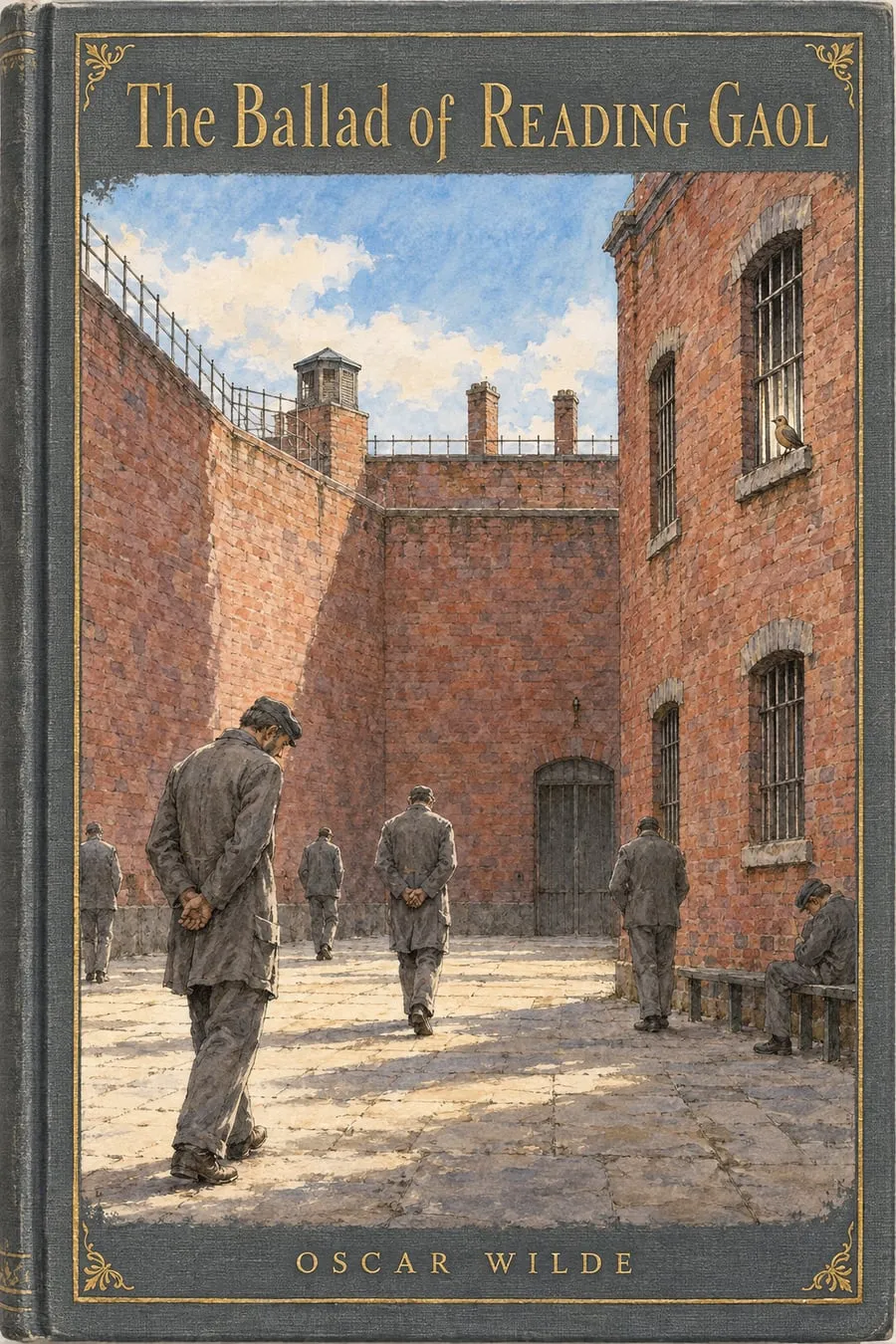 The Ballad of Reading GaolWritten after his release from prison, a long ballad about the hanging of a fellow prisoner, a trooper who had killed his wife. Wilde's last work, and his most read poem.Read more
  The SphinxA student in his room questions the ancient sphinx that has watched from its corner for a thousand years, and is frightened by what she knows.Read more
 Summary
The speaker begins by admitting to 'The crowded visions of a fiery youth / Which haunt me still', and tells one dream. Lying in a garden 'what time the Spring / Breaks like a bird from Winter', under a 'sapphire-vaulted' sky, among budding trees, violets, roses, butterflies and birdsong, the speaker feels only 'leaden heaviness'. To 'Ambition's slave' the flowers seem 'a pageant, and an unreal show', and the speaker lies 'Self-tortured, self-tormented', like the fabled snake that stings itself.
As the sun goes down, a figure comes from its fiery heart, robed whiter than flame and crowned with laurel. Kneeling, the speaker hails her as 'Immortal Glory! Great world-conqueror!' and begs not to 'die crownless'. The angel gently answers that the speaker was made 'For light and love and laughter', warns that ambition's 'deadly poison will infect thy heart', and offers the flowers of the garden as a fitter garland. The speaker refuses: mortal flowers live only from dawn to sunset, but her 'immortal coronal of Fame' cannot be harmed by age or winter.
The angel's face dims 'with the mists of pity'. Two beams of ambition flash from the speaker's eyes and wither the laurel, and one pale leaf falls on the speaker's brow. For 'One fiery-coloured moment' the speaker hears 'The sound of many nations praising me', but the praise turns barren, the leaf's thorns burn and bite, and the garden becomes 'a bare desert'. Unable to tear the leaf away, the speaker wakes with a cry to a grey dawn, and would call it all 'a mere idle dream' but for the pain in the heart 'And the red wounds of thorns upon my brow'.
Characters
The dreamer
Ambition's slave
The speaker, who recalls 'the crowded visions of a fiery youth'. In the dream the speaker lies joyless in a spring garden, begs the angel of Glory for her crown, scorns the flowers offered instead, and wins one moment of fame at the cost of thorns that still wound after waking.
The angel of Glory
Fame in shining form
A figure who comes from the heart of the setting sun, robed whiter than flame and crowned with laurel. The speaker hails her as 'Immortal Glory! Great world-conqueror!' She answers gently, warning that ambition poisons the heart, and when refused her face dims 'with the mists of pity'.
Themes
Ambition against happiness
The angel names the conflict: the speaker was made 'For light and love and laughter, not to waste / Thy youth in shooting arrows at the sun'. The garden offers every joy of spring, but 'Ambition's slave' cannot feel it; the bird sings 'out of tune' and the flowers seem 'an unreal show'. Ambition empties the world of pleasure long before it brings any reward.
The cost of fame
The speaker prizes the laurel because it seems deathless: 'Age cannot harm, nor winter's icy tooth'. But the fame it brings lasts 'One fiery-coloured moment', after which 'how barren was the nations' praise!' The laurel hides 'Bitter thorns' that turn the garden into 'a bare desert', and the crown of glory ends as something close to a crown of thorns.
Dream and waking
The poem is framed as a dream, 'Methought that once I lay', yet it does not end cleanly on waking. The speaker would think it 'a mere idle dream / But for this restless pain that gnaws my heart, / And the red wounds of thorns upon my brow.' The vision leaves real marks, so the warning it carries is meant to be taken as true.
Context
The subtitles give the poem's alternative title, 'Or, The Artist's Dream', a translation of the Polish 'Sen Artysty', and its source, 'From the Polish of Madame Helena Modjeska', which presents it as an English version of a Polish original. It is written in unrhymed blank verse, divided by breaks into a short opening, the dream itself and its bitter ending. One image, a bird that 'Made snow of all the blossoms', appears again in 'Ravenna'.
About this edition
- Text: the complete work from Standard Ebooks, released into the public domain (CC0 1.0). We change only the layout.
- Download the EPUB of the whole book it comes from, free, for any e-reader.
- Every quotation and glossary word in these notes is checked against the text.