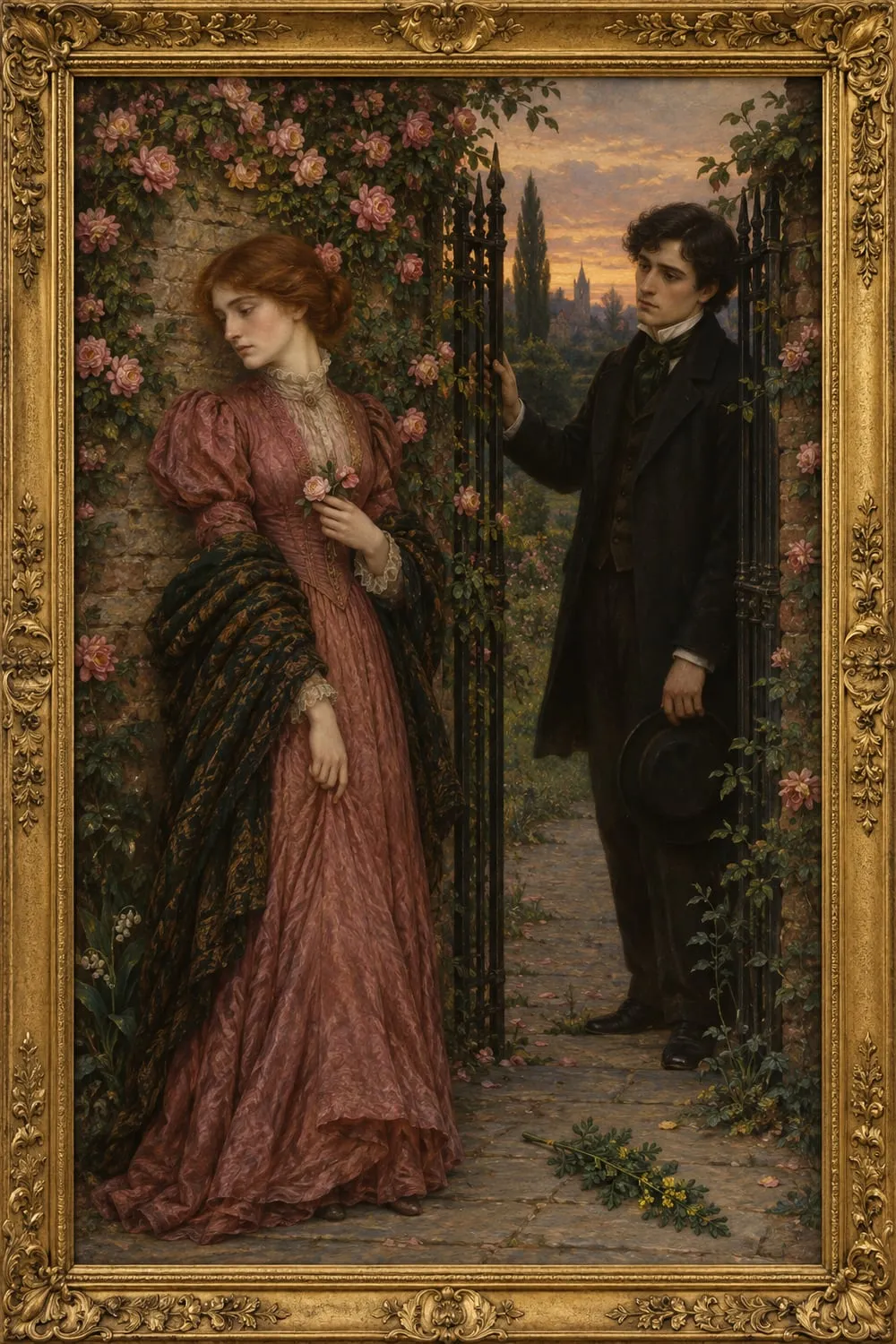
A lover remembers, and counts the cost
Roses and Rue
"Poets' hearts break so."
Poem
Could we dig up this long-buried treasure,Were it worth the pleasure,We never could learn love’s song,We are parted too long.
Could the passionate past that is fledCall back its dead,Could we live it all over again,Were it worth the pain!
I remember we used to meetBy an ivied seat,And you warbled each pretty wordWith the air of a bird;
And your voice had a quaver in it,Just like a linnet,And shook, as the blackbird’s throatWith its last big note;
And your eyes, they were green and greyLike an April day,But lit into amethystWhen I stooped and kissed;
And your mouth, it would never smileFor a long, long while,Then it rippled all over with laughterFive minutes after.
You were always afraid of a shower,Just like a flower:I remember you started and ranWhen the rain began.
I remember I never could catch you,For no one could match you,You had wonderful, luminous, fleet,Little wings to your feet.
I remember your hair—did I tie it?For it always ran riot—Like a tangled sunbeam of gold:These things are old.
I remember so well the room,And the lilac bloomThat beat at the dripping paneIn the warm June rain;
And the colour of your gown,It was amber-brown,And two yellow satin bowsFrom your shoulders rose.
And the handkerchief of French laceWhich you held to your face—Had a small tear left a stain?Or was it the rain?
On your hand as it waved adieuThere were veins of blue;In your voice as it said good-byeWas a petulant cry,
“You have only wasted your life.”(Ah, that was the knife!)When I rushed through the garden gateIt was all too late.
Could we live it over again,Were it worth the pain,Could the passionate past that is fledCall back its dead!
Well, if my heart must break,Dear love, for your sake,It will break in music, I know,Poets’ hearts break so.
But strange that I was not toldThat the brain can holdIn a tiny ivory cellGod’s heaven and hell.
In brief
SummaryThe speaker looks back on a love long ended and asks whether it could be lived again, and whether it would be worth the pain. Most of the poem is memory: meetings by an ivied seat, a voice that quavered like a linnet's, green-grey eyes that turned to amethyst when kissed, hair that ran riot, an amber-brown gown, a lace handkerchief stained by a tear or by the rain. The memories end with the beloved's parting words, 'You have only wasted your life', which cut like a knife. He answers that if his heart must break, it will break in music.
Key themes
"You have only wasted your life."
Related works
Explore more of Wilde's writing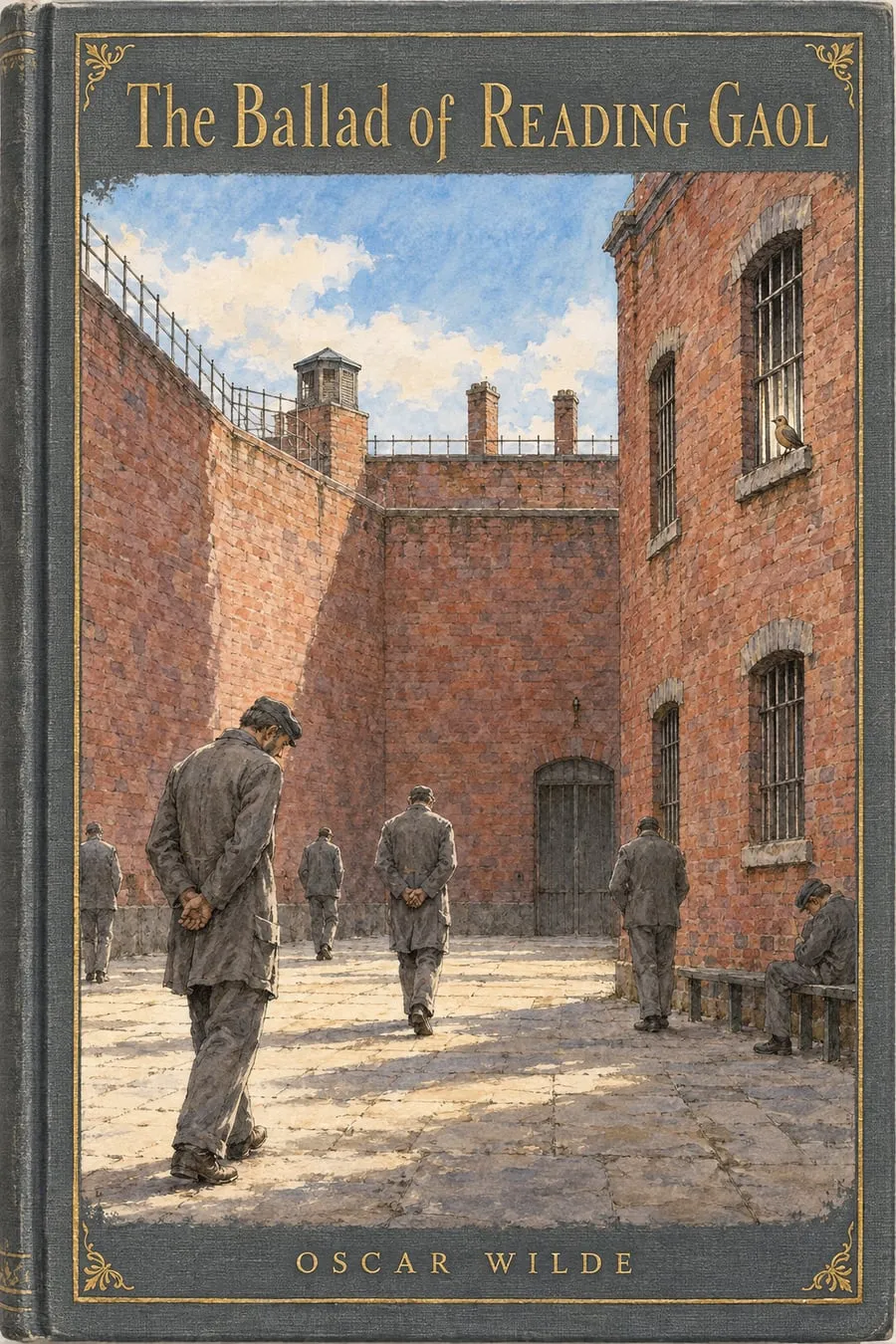 The Ballad of Reading GaolWritten after his release from prison, a long ballad about the hanging of a fellow prisoner, a trooper who had killed his wife. Wilde's last work, and his most read poem.Read more
 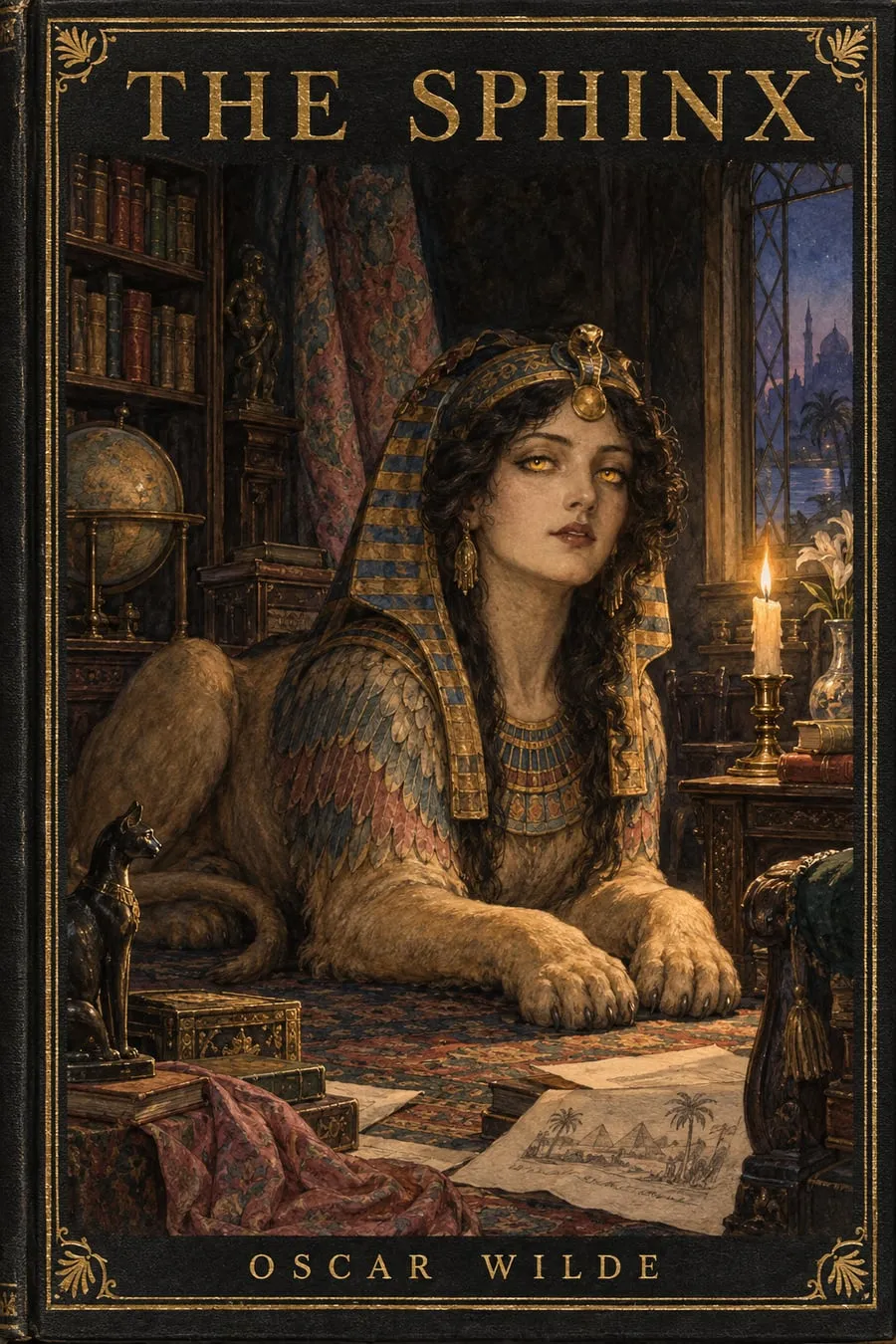 The SphinxA student in his room questions the ancient sphinx that has watched from its corner for a thousand years, and is frightened by what she knows.Read more
 Summary
The first two stanzas pose the poem's recurring question. Even if they could 'dig up this long-buried treasure', the speaker says, they could never learn love's song again: 'We are parted too long.' Even if 'the passionate past that is fled' could call back its dead and be lived over, would it be 'worth the pain'? Then come the memories, many opening 'I remember'. They used to meet 'By an ivied seat'; her voice had 'a quaver in it, / Just like a linnet'; her eyes were 'green and grey / Like an April day' but 'lit into amethyst' when he kissed her. Her mouth would not smile for a long while, then 'rippled all over with laughter / Five minutes after'.
She was afraid of showers and ran when the rain began; she was too quick for him to catch, with 'Little wings to your feet'; her hair was 'Like a tangled sunbeam of gold'. He remembers the room, the lilac beating 'at the dripping pane / In the warm June rain', her amber-brown gown with two yellow satin bows, and a handkerchief of French lace held to her face: 'Had a small tear left a stain? / Or was it the rain?'
Last comes the parting. Her hand waved adieu, and her voice said, with 'a petulant cry', 'You have only wasted your life.' He adds, '(Ah, that was the knife!)' When he rushed through the garden gate, 'It was all too late.' The opening question returns, and he accepts his grief: if his heart must break, 'It will break in music, I know, / Poets' hearts break so.' The last stanza turns to wonder that no one told him 'That the brain can hold / In a tiny ivory cell / God's heaven and hell'.
Characters
The speaker
A poet remembering love
A poet looking back on a love long lost, who wonders whether it could ever be relived and whether it would be worth the pain. He remembers the beloved in tender detail, recalls the words that wounded him, and ends by saying his heart will 'break in music'.
The beloved
Quick, laughing and lost
The woman the speaker loved, with a voice like a linnet's, green-grey eyes that turned to amethyst when kissed, and golden hair that 'always ran riot'. Quick-footed and afraid of showers, she wore an amber-brown gown with yellow satin bows. Her parting words, 'You have only wasted your life', are the poem's wound.
Themes
Memory in small details
The past survives as small, exact things, not grand events. The speaker recalls 'an ivied seat', a voice 'Just like a linnet', eyes 'green and grey / Like an April day', 'two yellow satin bows', and 'the lilac bloom / That beat at the dripping pane'. The easy, conversational rhymes, 'shower' with 'flower', 'catch you' with 'match you', give the memories the lightness of a song, which makes the loss sharper.
A wasted life
The poem's wound is one sentence: 'You have only wasted your life.' The speaker marks it at once: '(Ah, that was the knife!)'. Her charge hangs over his answer at the end, that his heart will 'break in music', for poetry is both his defence against her judgement and perhaps what she judged. The poem does not say which of them was right.
Heaven and hell within
The final stanza moves from the love story to a discovery. The speaker says it is strange 'that I was not told / That the brain can hold / In a tiny ivory cell / God's heaven and hell'. Memory holds both: the happiness of the remembered details and the torment of the parting live side by side in the same mind.
Quotes
"You have only wasted your life."
The beloved
"Poets' hearts break so."
The poem
"God's heaven and hell."
The poem
Context
The title sets roses, the flower of love, beside rue, a bitter herb long linked with regret. The poem is written in seventeen quatrains of rhymed couplets, each pairing a longer line with a shorter one, which gives it a loose, song-like movement. The question of its second stanza, 'Could the passionate past that is fled / Call back its dead', returns near the end, framing the memories between two versions of the same regret.
About this edition
- Text: the complete work from Standard Ebooks, released into the public domain (CC0 1.0). We change only the layout.
- Download the EPUB of the whole book it comes from, free, for any e-reader.
- Every quotation and glossary word in these notes is checked against the text.