The old gods on a Greek island
Santa Decca
"Great Pan is dead, and Mary's son is King."
Poem
The Gods are dead: no longer do we bringTo grey-eyed Pallas crowns of olive-leaves!Demeter’s child no more hath tithe of sheaves,And in the noon the careless shepherds sing,For Pan is dead, and all the wantoningBy secret glade and devious haunt is o’er:Young Hylas seeks the water-springs no more;Great Pan is dead, and Mary’s son is King.
And yet—perchance in this sea-trancèd isle,Chewing the bitter fruit of memory,Some God lies hidden in the asphodel.Ah Love! if such there be, then it were wellFor us to fly his anger: nay, but see,The leaves are stirring: let us watch awhile.
Corfu.
In brief
SummaryA sonnet on the passing of the Greek gods. The first eight lines state it flatly: no one brings olive crowns to Pallas or sheaves to Demeter's daughter, Pan is dead, Hylas no longer seeks the springs, and Christ, 'Mary's son', is King. Then the poem turns. On this 'sea-trancèd isle', the speaker wonders, some god may still lie hidden in the asphodel, chewing on memory. He tells his companion that they ought to flee its anger, but the leaves begin to stir, and instead they stay to watch.
Key themes
"The Gods are dead: no longer do we bring"
Summary
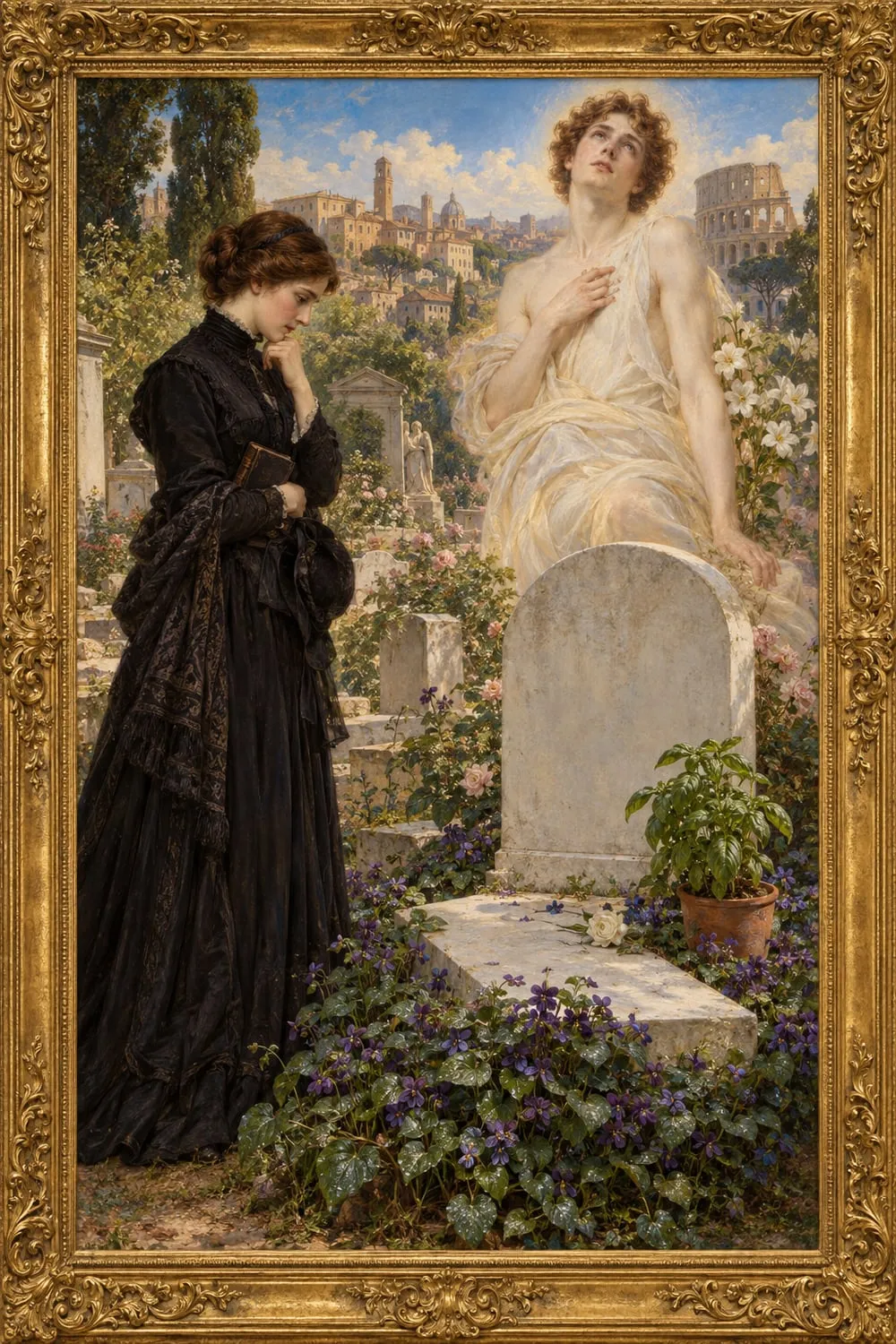
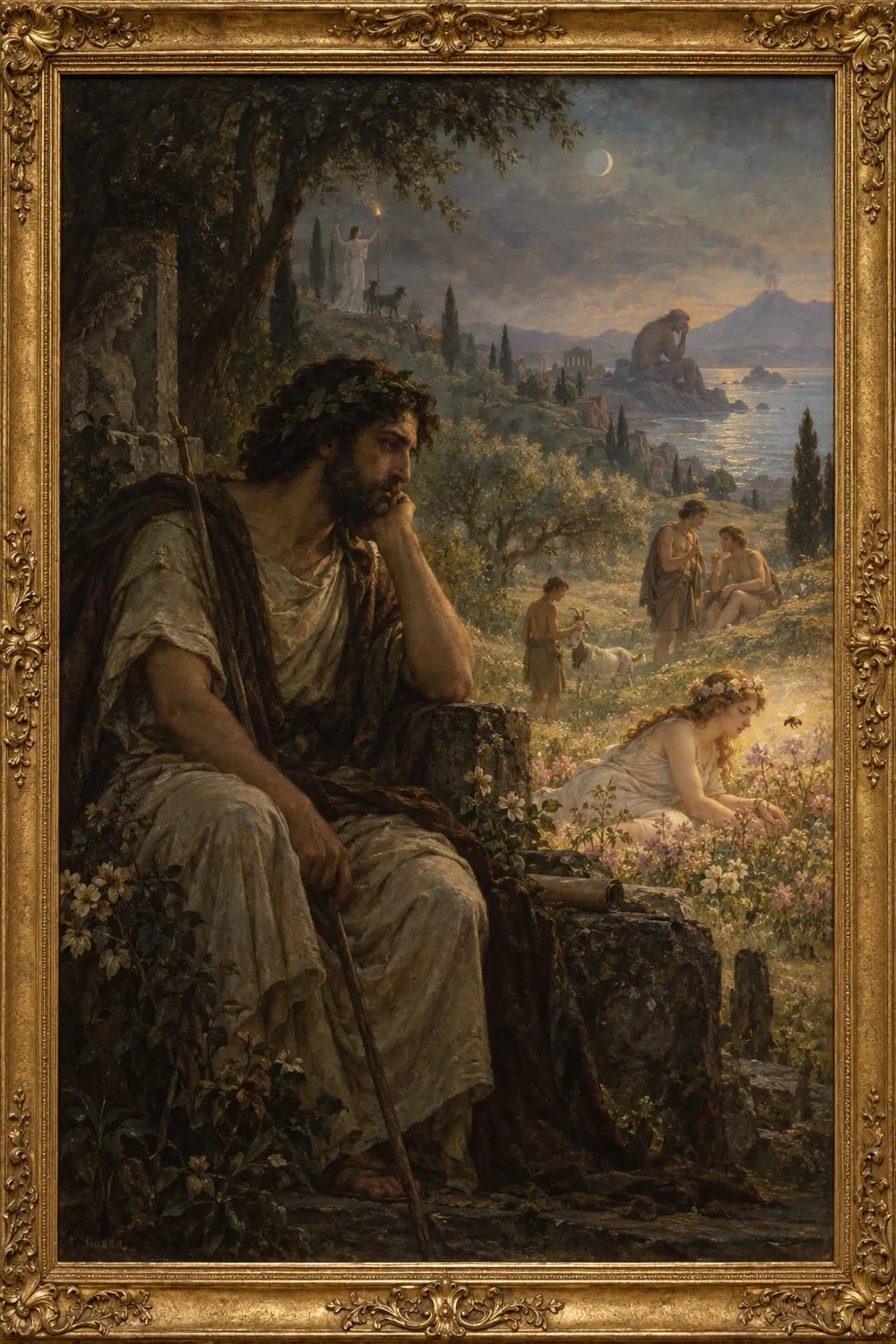
The octave declares that 'The Gods are dead'. No one now brings 'crowns of olive-leaves' to 'grey-eyed Pallas', and 'Demeter's child' receives no tithe of sheaves at harvest. Shepherds sing carelessly at noon, because Pan is dead and the old revels in secret glades are over; 'Young Hylas seeks the water-springs no more'. The octave ends by repeating its verdict: 'Great Pan is dead, and Mary's son is King.'
The sestet begins 'And yet'. Perhaps on this 'sea-trancèd isle', the speaker suggests, some god still lies hidden in the asphodel, 'Chewing the bitter fruit of memory'. He turns to his companion, 'Ah Love!', and says that if such a god exists they would be wise to flee his anger. Then he changes his mind mid-line: 'nay, but see, / The leaves are stirring: let us watch awhile.' The poem is signed 'Corfu'.
Characters
The speaker
A visitor to the island
The voice that first pronounces the Greek gods dead, then wonders whether one survives on this 'sea-trancèd isle'. He warns his companion that they should flee the god's anger, but at the first stirring of leaves he chooses to stay and watch.
Love
The speaker's companion
The person the speaker addresses as 'Ah Love!' in the sestet. They share the walk on the island, and the speaker's closing invitation, 'let us watch awhile', includes them in his hope of glimpsing a hidden god.
Themes
The death of the old gods
The octave is a roll-call of loss: Pallas without her olive crowns, Demeter's child without her sheaves, Pan dead, Hylas gone from the springs. The repeated 'Pan is dead' echoes the old legend of a voice announcing the death of great Pan, and the last line of the octave names what has replaced him: 'Mary's son is King.' The pagan world has given way to Christianity.
What lingers
The sestet refuses to let the verdict stand. 'And yet' opens the possibility that a god survives in hiding, 'Chewing the bitter fruit of memory' among the asphodel, the flower of the Greek underworld. The island itself is 'sea-trancèd', half asleep, the kind of place where the old world might linger unnoticed. Memory, not worship, keeps the god alive.
Curiosity over fear
The speaker first advises caution: 'it were well / For us to fly his anger'. Within a line he reverses himself: 'nay, but see, / The leaves are stirring: let us watch awhile.' The sonnet ends not with flight but with waiting, as the lovers stay to see whether the stirring leaves reveal a god. Longing for the old world outweighs fear of it.
Context
'Santa Decca' appears in the 'Flowers of Gold' section of Wilde's collected poems and is signed 'Corfu', the Greek island that is the 'sea-trancèd isle' of the sestet. It is a sonnet whose octave closes on a single statement, 'Great Pan is dead, and Mary's son is King', and whose sestet opens with 'And yet' to question it.
About this edition
- Text: the complete work from Standard Ebooks, released into the public domain (CC0 1.0). We change only the layout.
- Download the EPUB of the whole book it comes from, free, for any e-reader.
- Every quotation and glossary word in these notes is checked against the text.