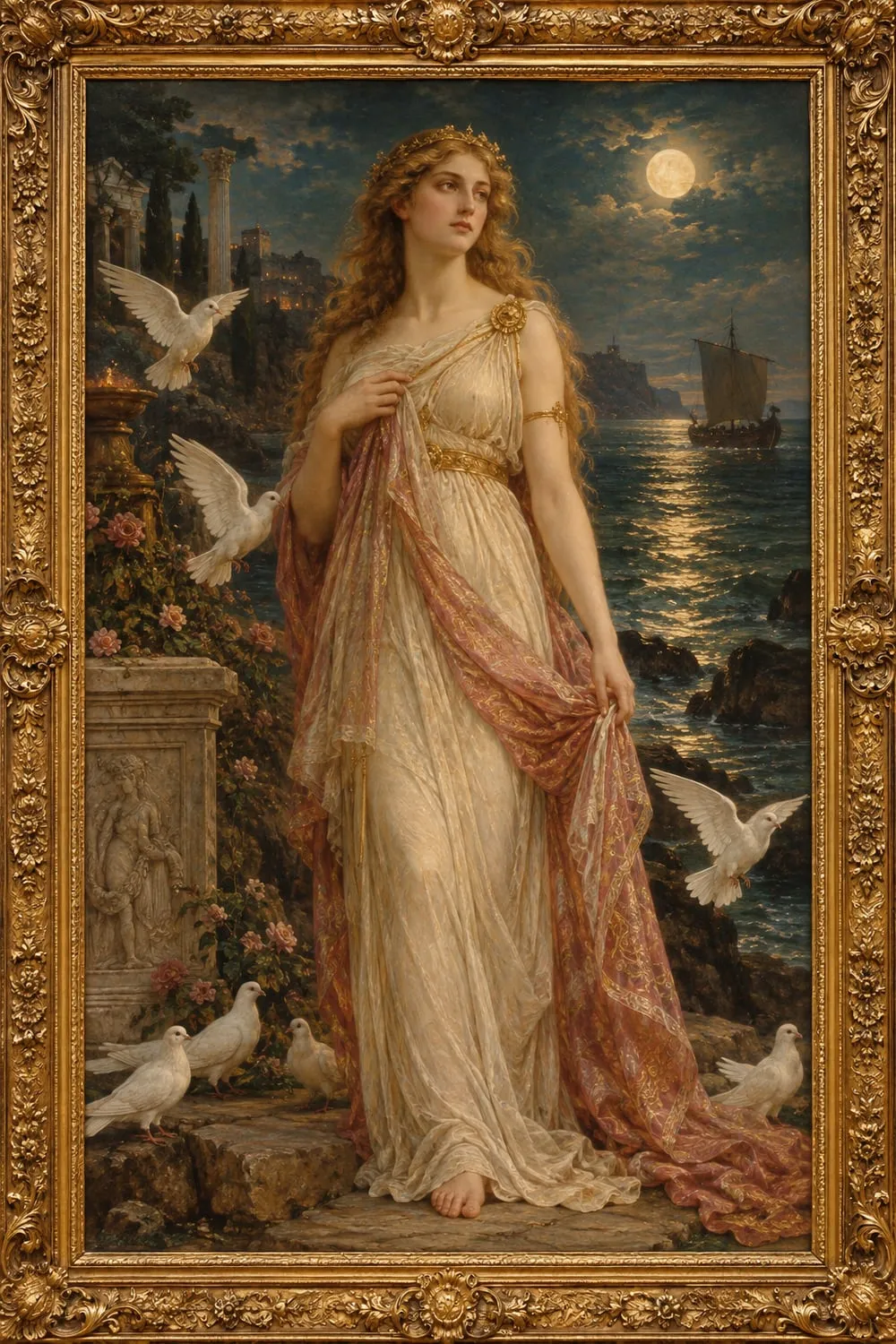
Helen of Troy returned to earth
The New Helen
"Lily of love, pure and inviolate!"
Poem
Where hast thou been since round the walls of TroyThe sons of God fought in that great emprise?Why dost thou walk our common earth again?Hast thou forgotten that impassioned boy,His purple galley, and his Tyrian men,And treacherous Aphrodite’s mocking eyes?For surely it was thou, who, like a starHung in the silver silence of the night,Didst lure the Old World’s chivalry and mightInto the clamorous crimson waves of war!
Or didst thou rule the fire-laden moon?In amorous Sidon was thy temple builtOver the light and laughter of the seaWhere, behind lattice scarlet-wrought and gilt,Some brown-limbed girl did weave thee tapestry,All through the waste and wearied hours of noon;Till her wan cheek with flame of passion burned,And she rose up the sea-washed lips to kissOf some glad Cyprian sailor, safe returnedFrom Calpé and the cliffs of Herakles!
No! thou art Helen, and none other one!It was for thee that young Sarpedôn died,And Memnôn’s manhood was untimely spent;It was for thee gold-crested Hector triedWith Thetis’ child that evil race to run,In the last year of thy beleaguerment;Ay! even now the glory of thy fameBurns in those fields of trampled asphodel,Where the high lords whom Ilion knew so wellClash ghostly shields, and call upon thy name.
Where hast thou been? in that enchanted landWhose slumbering vales forlorn Calypso knew,Where never mower rose at break of dayBut all unswathed the trammelling grasses grew,And the sad shepherd saw the tall corn standTill summer’s red had changed to withered grey?Didst thou lie there by some Lethaean streamDeep brooding on thine ancient memory,The crash of broken spears, the fiery gleamFrom shivered helm, the Grecian battle-cry?
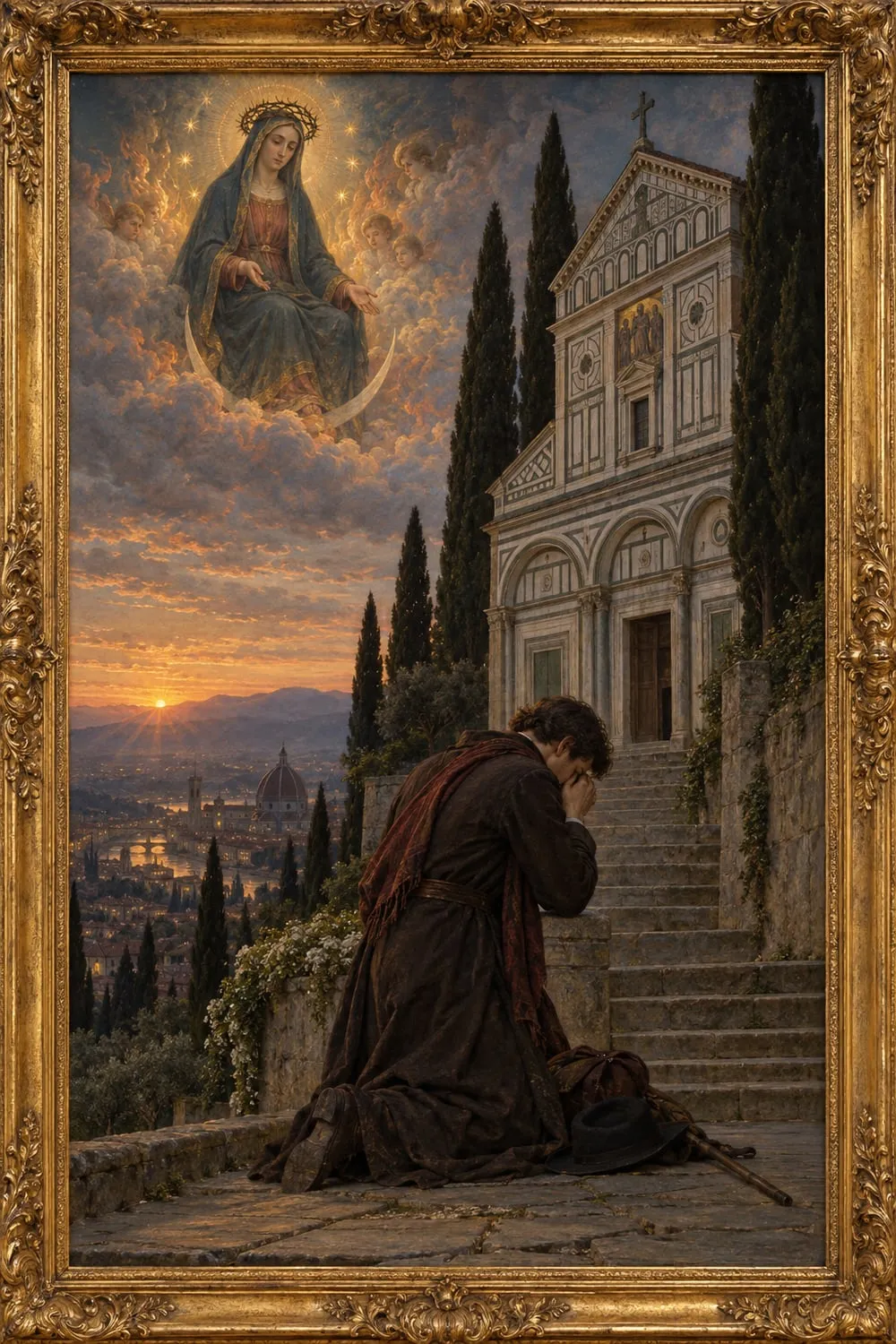
Nay, thou wert hidden in that hollow hillWith one who is forgotten utterly,That discrowned Queen men call the Erycine;Hidden away that never mightst thou seeThe face of Her, before whose mouldering shrineTo-day at Rome the silent nations kneel;Who gat from Love no joyous gladdening,But only Love’s intolerable pain,Only a sword to pierce her heart in twain,Only the bitterness of child-bearing.
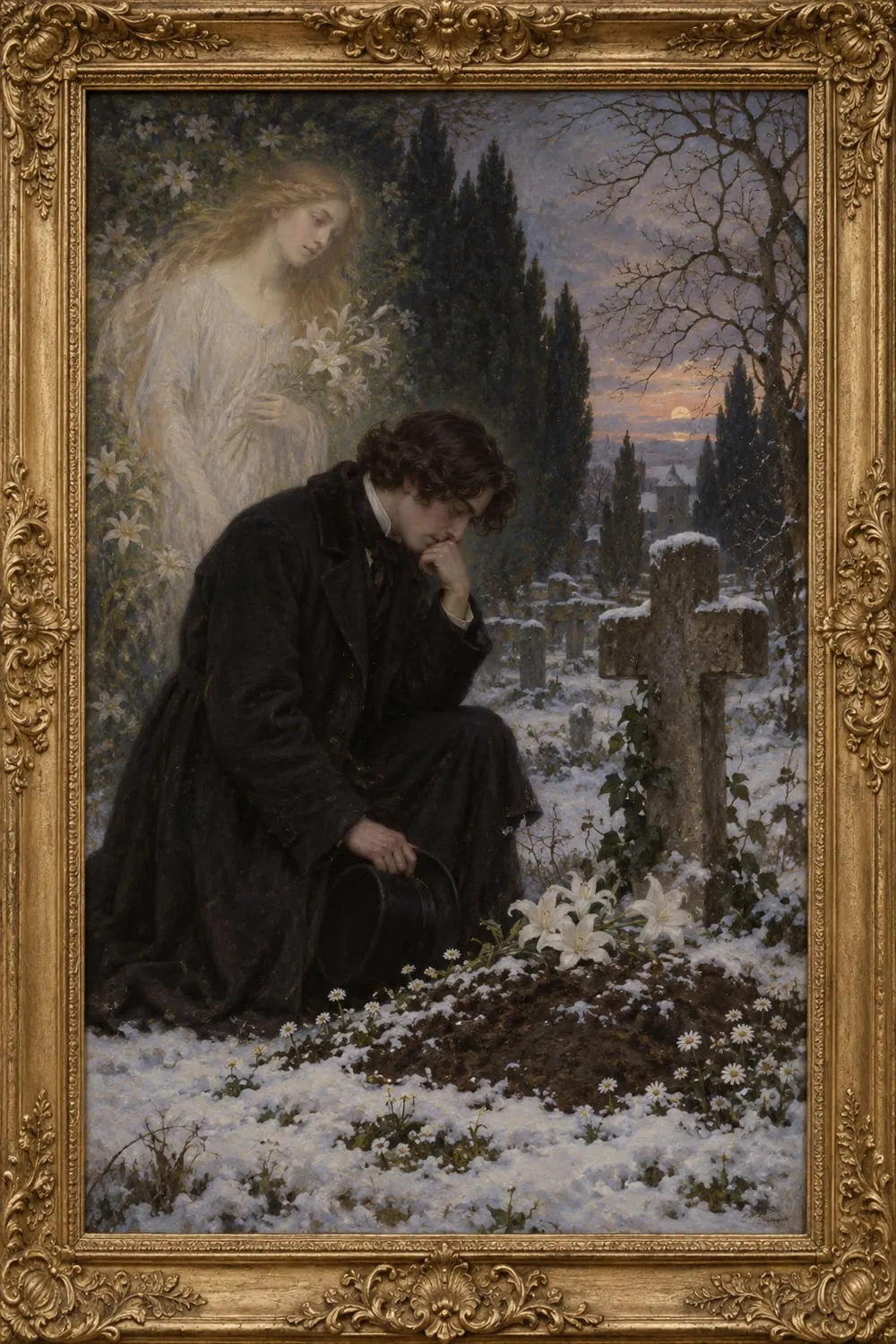
The lotus-leaves which heal the wounds of DeathLie in thy hand; O, be thou kind to me,While yet I know the summer of my days;For hardly can my tremulous lips draw breathTo fill the silver trumpet with thy praise,So bowed am I before thy mystery;So bowed and broken on Love’s terrible wheel,That I have lost all hope and heart to sing,Yet care I not what ruin time may bringIf in thy temple thou wilt let me kneel.
Alas, alas, thou wilt not tarry here,But, like that bird, the servant of the sun,Who flies before the north wind and the night,So wilt thou fly our evil land and drear,Back to the tower of thine old delight,And the red lips of young Euphorion;Nor shall I ever see thy face again,But in this poisonous garden-close must stay,Crowning my brows with the thorn-crown of pain,Till all my loveless life shall pass away.
O Helen! Helen! Helen! yet a while,Yet for a little while, O, tarry here,Till the dawn cometh and the shadows flee!For in the gladsome sunlight of thy smileOf heaven or hell I have no thought or fear,Seeing I know no other god but thee:No other god save him, before whose feetIn nets of gold the tired planets move,The incarnate spirit of spiritual loveWho in thy body holds his joyous seat.
Thou wert not born as common women are!But, girt with silver splendour of the foam,Didst from the depths of sapphire seas arise!And at thy coming some immortal star,Bearded with flame, blazed in the Eastern skies,And waked the shepherds on thine island-home.Thou shalt not die: no asps of Egypt creepClose at thy heels to taint the delicate air;No sullen-blooming poppies stain thy hair,Those scarlet heralds of eternal sleep.
Lily of love, pure and inviolate!Tower of ivory! red rose of fire!Thou hast come down our darkness to illume:For we, close-caught in the wide nets of Fate,Wearied with waiting for the World’s Desire,Aimlessly wandered in the House of gloom,Aimlessly sought some slumberous anodyneFor wasted lives, for lingering wretchedness,Till we beheld thy re-arisen shrine,And the white glory of thy loveliness.
In brief
SummaryThe speaker addresses a woman of such beauty that she can only be Helen of Troy come back to earth. He asks where she has been since the Trojan War: ruling in a temple at Sidon, dreaming by a river of forgetfulness, or hidden in a hill with the forgotten goddess of love. He kneels to her, knows she will leave him, and begs her to stay until dawn. In the last stanzas her birth from the sea, the star that marked her coming and the titles 'Tower of ivory' and 'Lily of love' join Helen, Venus and the Virgin in one figure of redeeming beauty.
Key themes
"No! thou art Helen, and none other one!"
Summary
The speaker asks the woman where she has been since the war at Troy, and why she walks 'our common earth again'. Has she forgotten Paris, 'that impassioned boy', and 'treacherous Aphrodite's mocking eyes'? It was she who lured 'the Old World's chivalry and might' into war. Perhaps instead she ruled the moon from a temple in 'amorous Sidon'. 'No! thou art Helen', he decides: Sarpedon and Memnon died for her, Hector ran his last race against Achilles, and the heroes' ghosts still call her name among the asphodel.
He wonders if she lay in Calypso's land by a 'Lethaean stream', and answers that she was hidden in a 'hollow hill' with 'the Erycine', the forgotten goddess of love, so that she would never see the Virgin, before whose shrine the nations now kneel at Rome and who gained from love only 'a sword to pierce her heart in twain'. He begs her to be kind to him: he is 'bowed and broken on Love's terrible wheel' and asks only to kneel in her temple. Yet he knows she will fly back to her old tower and 'young Euphorion', leaving him in 'this poisonous garden-close' wearing 'the thorn-crown of pain'.
He cries 'O Helen! Helen! Helen!' and asks her to stay till dawn: in her smile he fears neither heaven nor hell and knows no god but her and the Love that dwells in her body. She was not born as common women are, but rose from 'sapphire seas', and a flaming star woke the shepherds at her coming. She will not die. The last stanza hails her as 'Tower of ivory' and 'red rose of fire', come to light a weary world with 'the white glory of thy loveliness'.
Characters
The speaker
The kneeling worshipper
A lover who is 'bowed and broken on Love's terrible wheel' and treats the woman he addresses as a goddess. He questions her, pleads with her, begs her to stay until dawn, and ends by hailing her as the light of a dark and weary world.
The new Helen
Beauty returned to earth
The woman the speaker hails as Helen of Troy walking 'our common earth again'. She is imagined as the cause of the Trojan War, as a goddess worshipped at Sidon, as one born from the sea foam, and finally as a 'Lily of love, pure and inviolate' who will not die. She never speaks.
Themes
Beauty as religion
The speaker treats the woman as a goddess. He asks to 'kneel' in her 'temple', says 'I know no other god but thee', and ends with 'thy re-arisen shrine'. The last stanza borrows 'Tower of ivory' and the image of a rose from Catholic prayers to the Virgin and gives them to her. The devotion that other poems in the group give to the Church is here given to a beautiful woman.
Helen, Venus and Mary
The New Helen is built from three figures. She is Helen, for whom 'young Sarpedôn died'; she is like Venus, rising 'girt with silver splendour of the foam'; and her coming is marked by a star that 'waked the shepherds', as at the Nativity. The fifth stanza sets her against Mary, who got from love 'Only a sword to pierce her heart in twain'. She becomes a saviour of joy rather than of sorrow.
Love as suffering
For all his worship, the speaker is in pain. He is 'bowed and broken on Love's terrible wheel', has 'lost all hope and heart to sing', and expects to stay in 'this poisonous garden-close' crowned with 'the thorn-crown of pain' when she leaves. The crown of thorns gives him a Christ-like suffering. Her beauty redeems the world in the final stanza, but it does not save him.
Context
The New Helen is the last poem in the Rosa Mystica group of Wilde's Poems (1881). It is written in ten stanzas of ten lines, addressed to a woman the speaker hails as Helen of Troy returned. Its closing stanza draws on the Litany of Loreto, whose titles for the Virgin include 'Tower of Ivory' and 'Mystical Rose'; the group's own name, Rosa Mystica, is the Latin form of that second title.
About this edition
- Text: the complete work from Standard Ebooks, released into the public domain (CC0 1.0). We change only the layout.
- Download the EPUB of the whole book it comes from, free, for any e-reader.
- Every quotation and glossary word in these notes is checked against the text.