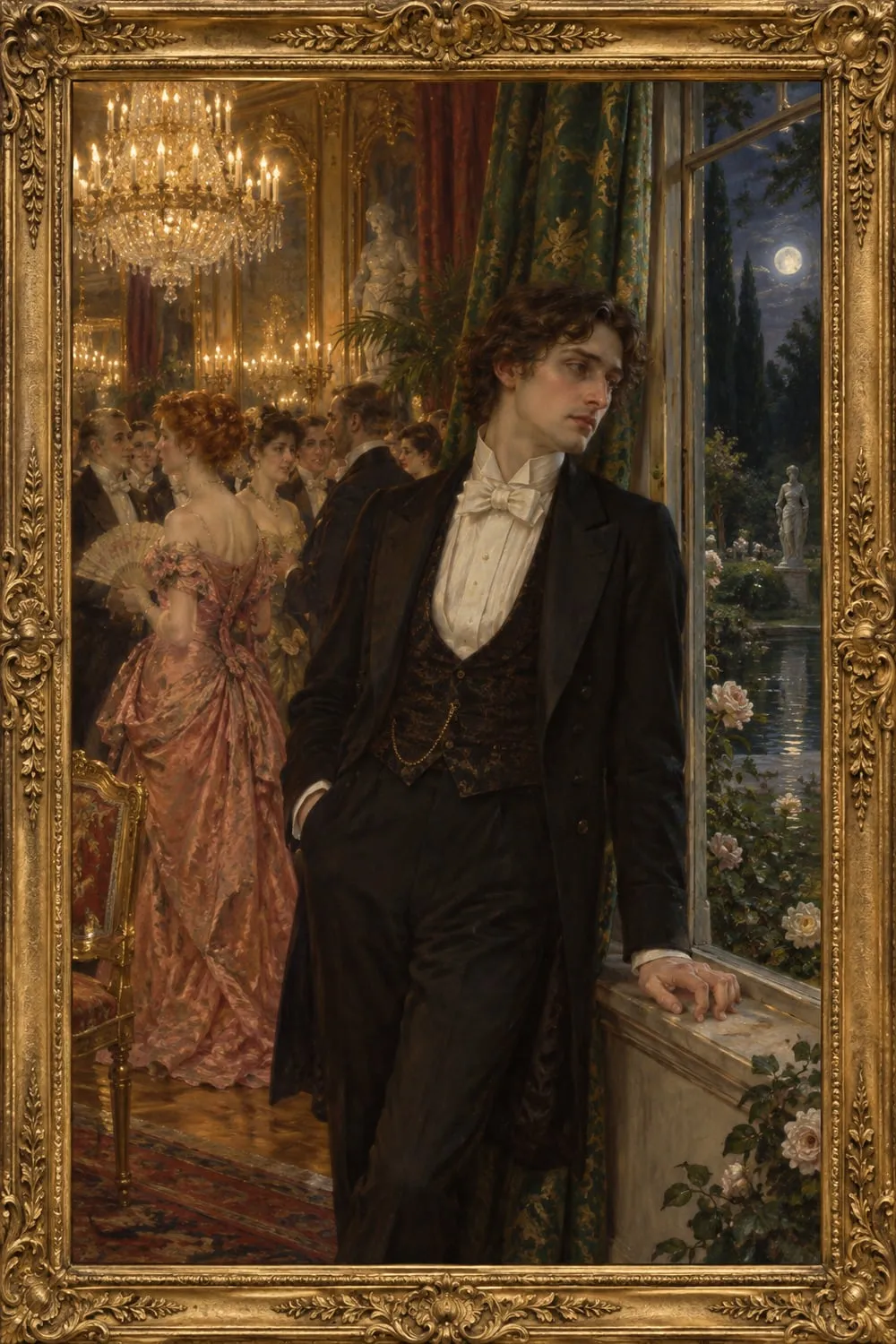
Weariness with a paltry age
Taedium Vitae
"Where my white soul first kissed the mouth of sin."
Poem
To stab my youth with desperate knives, to wearThis paltry age’s gaudy livery,To let each base hand filch my treasury,To mesh my soul within a woman’s hair,And be mere Fortune’s lackeyed groom—I swearI love it not! these things are less to meThan the thin foam that frets upon the sea,Less than the thistledown of summer airWhich hath no seed: better to stand aloofFar from these slanderous fools who mock my lifeKnowing me not, better the lowliest roofFit for the meanest hind to sojourn in,Than to go back to that hoarse cave of strifeWhere my white soul first kissed the mouth of sin.
In brief
SummaryA sonnet of disgust with worldly life, written as one long, driving sentence. The speaker lists what the world demands: to stab youth with 'desperate knives', wear 'This paltry age's gaudy livery', let base hands steal, tangle the soul in a woman's hair and serve as Fortune's groom. 'I swear / I love it not!' Such things weigh less than sea foam or seedless thistledown. Better to stand aloof from the slanderous fools who mock, and to live under the humblest roof, than to go back to 'that hoarse cave of strife' where the soul first kissed the mouth of sin.
Key themes
"This paltry age's gaudy livery,"
Summary
The poem opens with a string of things the speaker refuses: 'To stab my youth with desperate knives, to wear / This paltry age's gaudy livery, / To let each base hand filch my treasury, / To mesh my soul within a woman's hair, / And be mere Fortune's lackeyed groom'. Then comes the outburst: 'I swear / I love it not!' These things are 'less to me / Than the thin foam that frets upon the sea', less than the 'thistledown of summer air / Which hath no seed'.
The last lines set out the alternative. It is 'better to stand aloof / Far from these slanderous fools who mock my life / Knowing me not', better 'the lowliest roof / Fit for the meanest hind to sojourn in', than to go back to 'that hoarse cave of strife / Where my white soul first kissed the mouth of sin'. The poem ends on the place of first corruption, which the speaker will not revisit.
Characters
The speaker
The weary voice
A voice that lists the humiliations of worldly life, from wearing 'gaudy livery' to being 'Fortune's lackeyed groom', and swears 'I love it not!' Mocked by 'slanderous fools', the speaker would prefer the humblest hut to a return to the place where the soul first met sin.
Themes
Contempt for the age
The speaker sees worldly life as degrading service. To live in it is to wear 'This paltry age's gaudy livery', a servant's uniform, and to be 'mere Fortune's lackeyed groom'. Other people are 'base' hands that 'filch my treasury', or 'slanderous fools who mock my life / Knowing me not'. The title, Latin for 'weariness of life', names the disgust that runs through every line.
Withdrawal as escape
Against the world the speaker sets solitude and simplicity: 'better to stand aloof', better 'the lowliest roof / Fit for the meanest hind'. What the world offers is dismissed as 'the thin foam that frets upon the sea' and thistledown 'Which hath no seed', empty and fruitless. A labourer's hut is preferred to a life of show, theft and strife.
Innocence and sin
The final line reveals what lies beneath the weariness. The world is 'that hoarse cave of strife / Where my white soul first kissed the mouth of sin'. The 'white soul' recalls a lost innocence, and the kiss makes sin a seduction. The refusal to 'go back' is also a fear of returning to the place where that innocence was lost.
Quotes
"This paltry age's gaudy livery,"
The speaker
"I love it not! these things are less to me"
The speaker
Context
'Taedium Vitae', Latin for 'weariness of life', appears in the 'Fourth Movement' section of Wilde's collected poems. It is a sonnet written as one long sentence, piling up clauses that begin 'To stab', 'to wear', 'To let' and 'To mesh' before the oath 'I swear / I love it not!', and then weighing the world against a life apart.
About this edition
- Text: the complete work from Standard Ebooks, released into the public domain (CC0 1.0). We change only the layout.
- Download the EPUB of the whole book it comes from, free, for any e-reader.
- Every quotation and glossary word in these notes is checked against the text.