A pilgrim turns home short of Rome
Rome Unvisited
"I lay this barren gift of song!"
Poem
I
The corn has turned from grey to red,Since first my spirit wandered forthFrom the drear cities of the north,And to Italia’s mountains fled.
And here I set my face towards home,For all my pilgrimage is done,Although, methinks, yon blood-red sunMarshals the way to Holy Rome.
O Blessed Lady, who dost holdUpon the seven hills thy reign!O Mother without blot or stain,Crowned with bright crowns of triple gold!
O Roma, Roma, at thy feetI lay this barren gift of song!For, ah! the way is steep and longThat leads unto thy sacred street.
II
And yet what joy it were for meTo turn my feet unto the south,And journeying towards the Tiber mouthTo kneel again at Fiesole!
And wandering through the tangled pinesThat break the gold of Arno’s stream,To see the purple mist and gleamOf morning on the Apennines
By many a vineyard-hidden home,Orchard and olive-garden grey,Till from the drear Campagna’s wayThe seven hills bear up the dome!
III
A pilgrim from the northern seas—What joy for me to seek aloneThe wondrous temple and the throneOf Him who holds the awful keys!
When, bright with purple and with gold,Come priest and holy Cardinal,And borne above the heads of allThe gentle Shepherd of the Fold.
O joy to see before I dieThe only God-anointed King,And hear the silver trumpets ringA triumph as He passes by!
Or at the brazen-pillared shrineHolds high the mystic sacrifice,And shows his God to human eyesBeneath the veil of bread and wine.
IV
For lo, what changes time can bring!The cycles of revolving yearsMay free my heart from all its fears,And teach my lips a song to sing.
Before yon field of trembling goldIs garnered into dusty sheaves,Or ere the autumn’s scarlet leavesFlutter as birds adown the wold,
I may have run the glorious race,And caught the torch while yet aflame,And called upon the holy nameOf Him who now doth hide His face.
Arona.
In brief
SummaryA pilgrim from the north has wandered through the mountains of Italy all summer and now, at Arona, turns for home without having reached Rome. In four short parts he offers the city 'this barren gift of song', imagines the road south through Fiesole and the Campagna to the great dome, and pictures the Pope carried in procession and raising the Host at Mass. He ends on hope rather than arrival: before the harvest is in, time may free him from his fears and let him call on the God who 'now doth hide His face'.
Key themes
"O Roma, Roma, at thy feet"
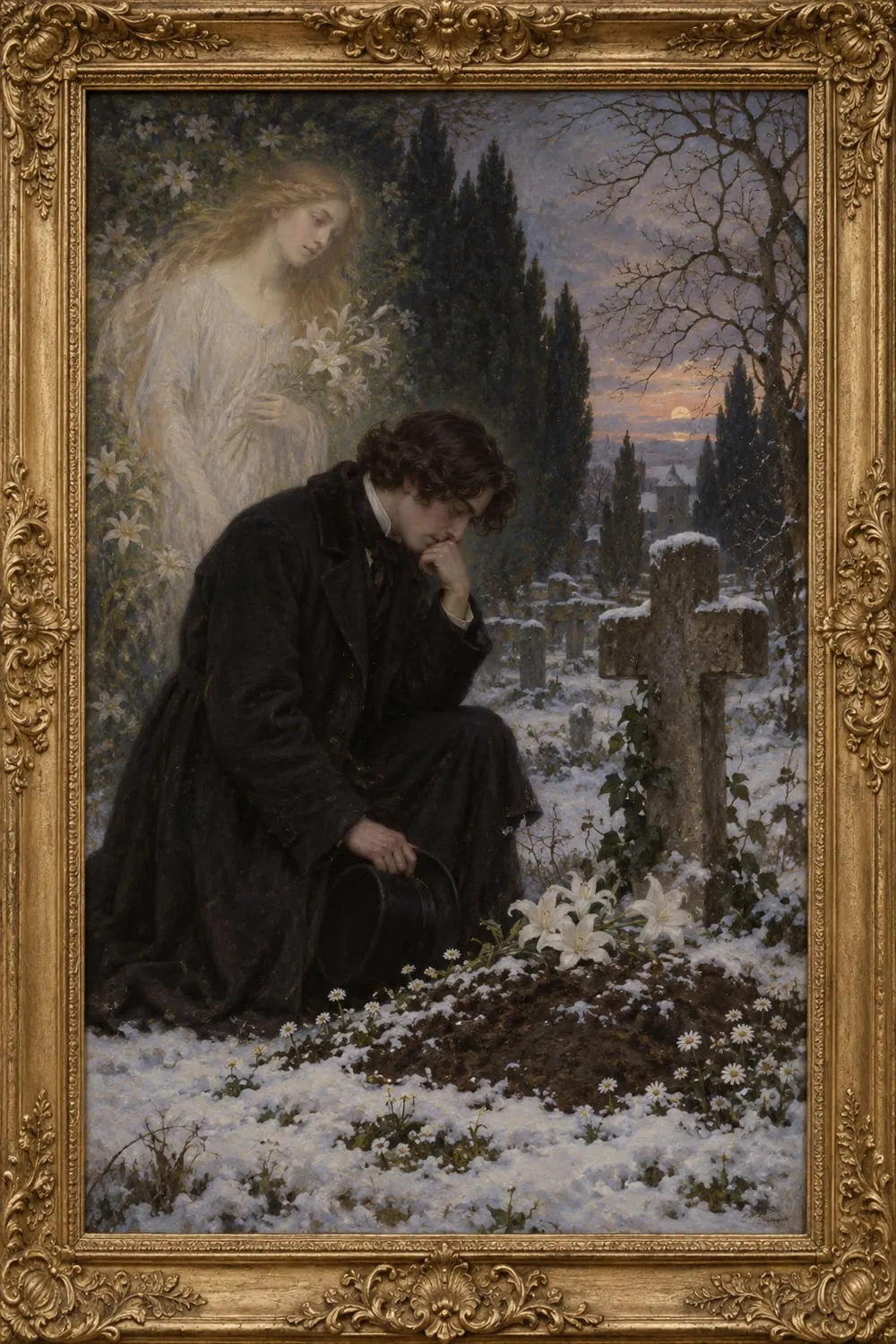
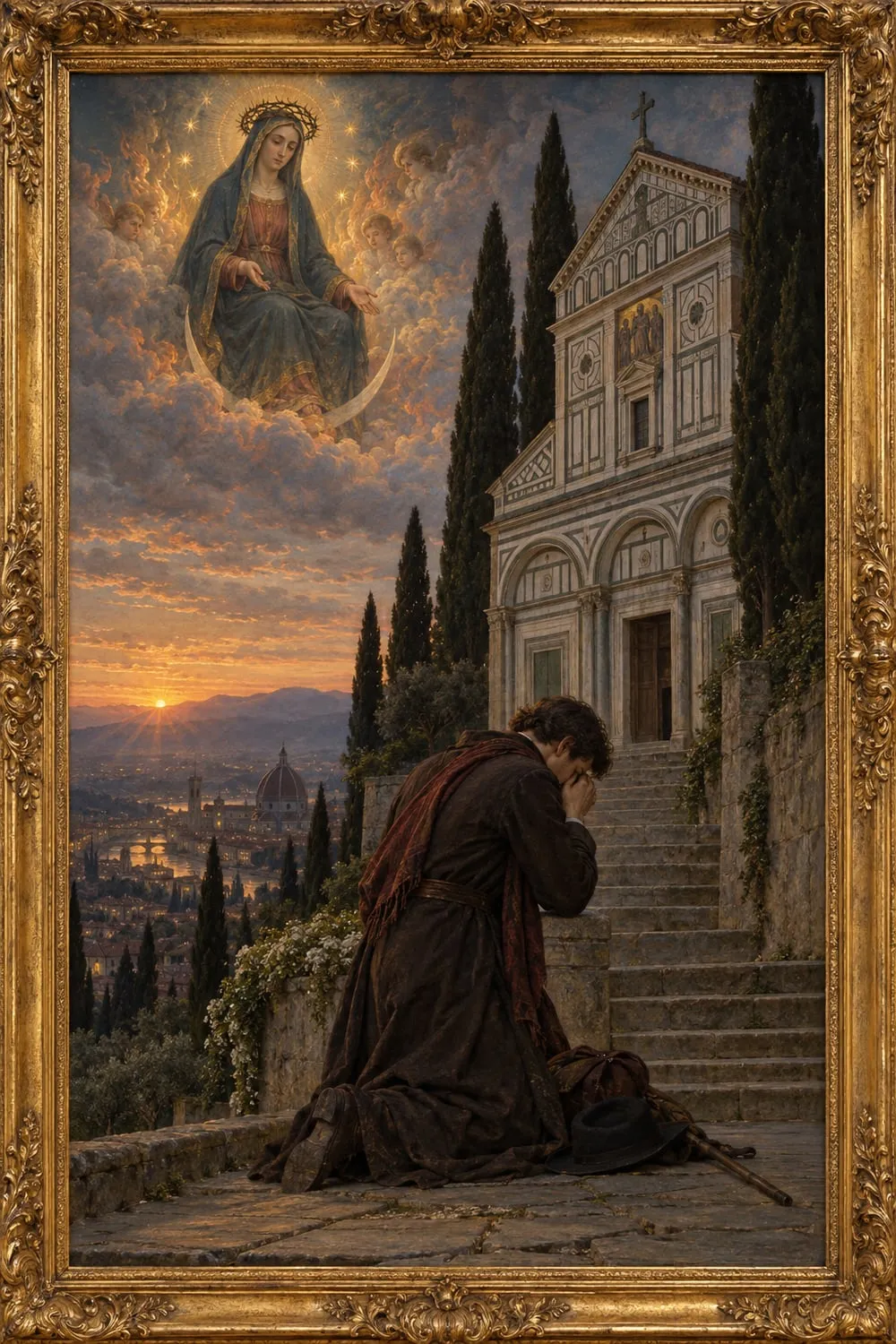
Summary
In the first part the speaker marks the turning season: the corn has changed 'from grey to red' since he left 'the drear cities of the north' for the mountains of Italy. His pilgrimage is done and he sets his face towards home, though the blood-red sunset seems to point 'the way to Holy Rome'. He hails the 'Blessed Lady' who reigns 'Upon the seven hills', a 'Mother without blot or stain' crowned with 'triple gold', the Church of Rome pictured as a queen, and lays at Rome's feet 'this barren gift of song', because the way is 'steep and long'.
The second and third parts imagine the journey he will not make. He thinks what joy it would be to go south, kneel again at Fiesole, see the morning mist on the Apennines and pass vineyards and olive gardens until 'the seven hills bear up the dome'. As 'A pilgrim from the northern seas' he longs to see the throne 'Of Him who holds the awful keys', the Pope, borne above priests and cardinals to the ring of silver trumpets, and to watch him raise 'the mystic sacrifice' of bread and wine at the 'brazen-pillared shrine'.
The last part looks to the future. 'For lo, what changes time can bring!' The years may free his heart from its fears and teach him a song worth singing. Before the golden fields are gathered into sheaves, he may have 'run the glorious race', caught the torch while it still burns, and called on the name of God, who 'now doth hide His face'. The place name Arona closes the poem.
Characters
The speaker
The pilgrim from the north
A traveller from 'the drear cities of the north' who has spent the summer in the Italian mountains. He longs for Rome and its ceremonies but turns home without seeing them, troubled by fears and by a God who hides His face, and hopes that time will bring him the faith he lacks.
Rome
The Lady of seven hills
The city and the Church that reigns there, hailed as 'O Blessed Lady' whose reign is 'Upon the seven hills', a 'Mother without blot or stain' crowned 'with bright crowns of triple gold'. 'O Roma, Roma' receives the speaker's 'barren gift of song' from afar, at the end of a road that is 'steep and long'.
The Pope
The imagined Shepherd
Seen only in the speaker's imagination as 'Him who holds the awful keys', 'The gentle Shepherd of the Fold' and 'The only God-anointed King'. The speaker pictures him carried in procession to silver trumpets and raising the Host at Mass.
Themes
Pilgrimage and hesitation
The whole poem is spoken on a threshold. The speaker says 'all my pilgrimage is done', yet the sunset 'Marshals the way to Holy Rome', and the middle parts are built on 'what joy it were' and 'What joy for me', a longing he does not act on. The title names the result: Rome stays unvisited, and the road south exists only in his imagination.
Faith deferred
The last part admits a spiritual difficulty behind the geographical one. God is one 'who now doth hide His face', and the speaker's heart still holds 'fears'. He hopes that 'The cycles of revolving years' may change him, and pictures the faith he has not yet reached as a race and a torch passed on. The poem ends on possibility, 'I may have run the glorious race', not on certainty.
The splendour of Rome
The imagined Rome is a city of ceremony: priest and Cardinal 'bright with purple and with gold', 'The gentle Shepherd of the Fold' carried above the crowd, silver trumpets, and a 'brazen-pillared shrine' where God is shown 'Beneath the veil of bread and wine'. The richness of the picture explains the pull the city has on him, and makes his turning away the more striking.
Quotes
"O Roma, Roma, at thy feet"
The poem
"I lay this barren gift of song!"
The poem
"Of Him who now doth hide His face."
The poem
Context
Rome Unvisited is one of the poems in the Rosa Mystica group of Wilde's Poems (1881). It is divided into four numbered parts, written in four-line stanzas, and the place name Arona, a town on Lake Maggiore in northern Italy, is printed at its foot. The title and that closing name together frame the poem as a pilgrimage that turns back in the north, far from the city it praises.
About this edition
- Text: the complete work from Standard Ebooks, released into the public domain (CC0 1.0). We change only the layout.
- Download the EPUB of the whole book it comes from, free, for any e-reader.
- Every quotation and glossary word in these notes is checked against the text.