A rival wonder-worker weeps for himself
The Master
"And yet they have not crucified me."
Poem in prose
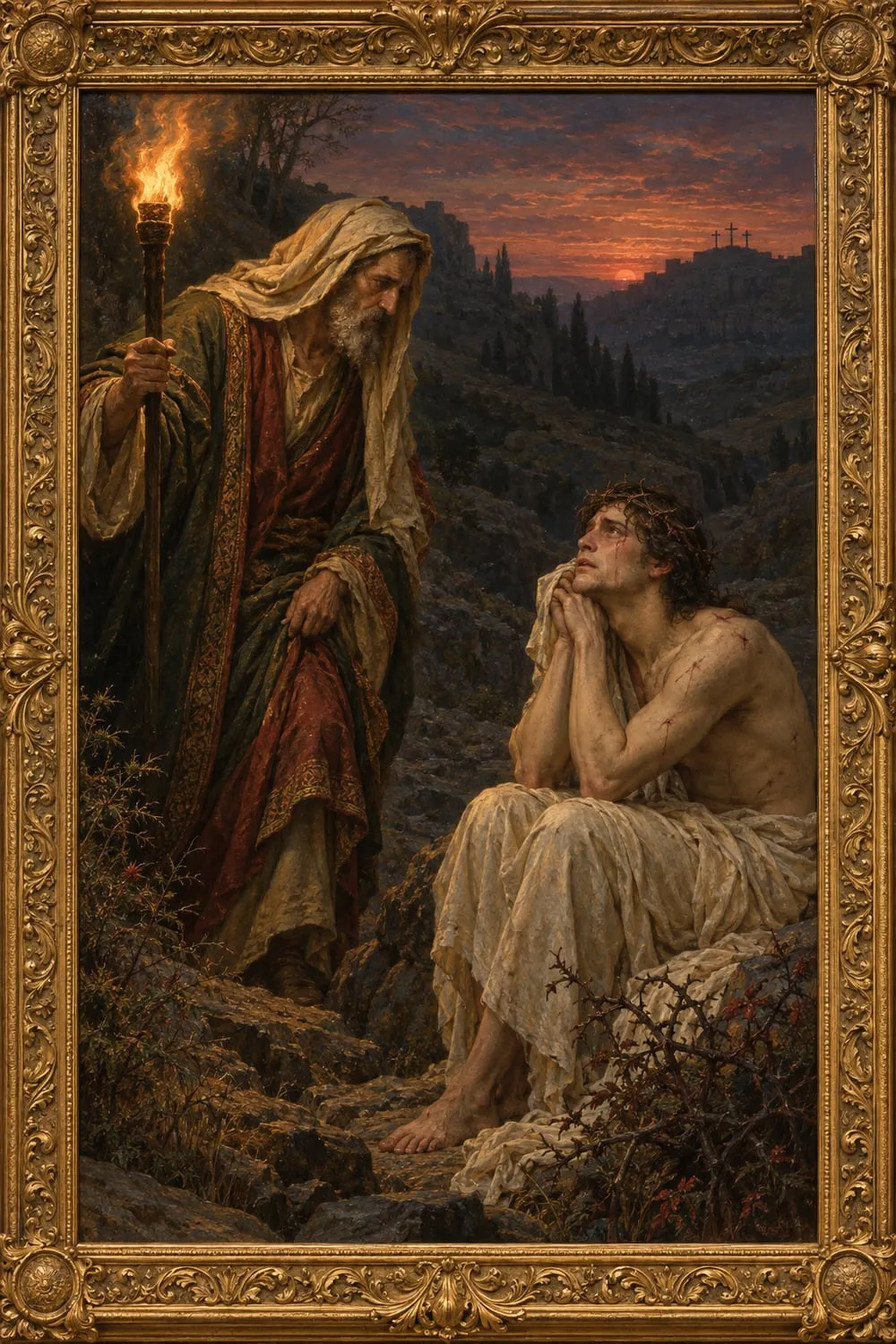
Now when the darkness came over the earth Joseph of Arimathea, having lighted a torch of pinewood, passed down from the hill into the valley. For he had business in his own home.
And kneeling on the flint stones of the Valley of Desolation he saw a young man who was naked and weeping. His hair was the colour of honey, and his body was as a white flower, but he had wounded his body with thorns and on his hair had he set ashes as a crown.
And he who had great possessions said to the young man who was naked and weeping, “I do not wonder that your sorrow is so great, for surely He was a just man.”
And the young man answered, “It is not for Him that I am weeping, but for myself. I too have changed water into wine, and I have healed the leper and given sight to the blind. I have walked upon the waters, and from the dwellers in the tombs I have cast out devils. I have fed the hungry in the desert where there was no food, and I have raised the dead from their narrow houses, and at my bidding, and before a great multitude of people, a barren fig-tree withered away. All things that this man has done I have done also. And yet they have not crucified me.”
In brief
SummaryAs darkness comes over the earth, Joseph of Arimathea goes down from the hill with a torch and finds a naked young man weeping in the Valley of Desolation, his body wounded with thorns and his hair crowned with ashes. Joseph assumes he mourns the just man who has died. The young man says he weeps for himself: he too has turned water into wine, healed the leper, given sight to the blind, walked on the waters, cast out devils, fed the hungry and raised the dead. 'All things that this man has done I have done also. And yet they have not crucified me.'
Key themes
"It is not for Him that I am weeping, but for myself."
Summary
When darkness comes over the earth, Joseph of Arimathea lights a torch of pinewood and passes down from the hill into the valley, for he has business in his own home. In the Valley of Desolation he sees a young man kneeling on the flint stones, naked and weeping. His hair is 'the colour of honey', and his body is 'as a white flower', but he has wounded his body with thorns and set ashes on his hair as a crown.
Joseph, 'he who had great possessions', says to him, 'I do not wonder that your sorrow is so great, for surely He was a just man.' The young man answers that he is weeping not for Him but for himself. He too has changed water into wine, healed the leper and given sight to the blind. He has walked upon the waters and cast out devils from the dwellers in the tombs, fed the hungry in the desert and raised the dead from 'their narrow houses', and at his bidding a barren fig-tree has withered before a great multitude. 'All things that this man has done I have done also. And yet they have not crucified me.'
Characters
Joseph of Arimathea
The man of great possessions
A man 'who had great possessions', who comes down from the hill at dark with a pinewood torch, on his way home. Finding the young man weeping, he assumes the grief is for 'a just man', and receives an answer he did not expect.
The young man
The uncrucified wonder-worker
Naked, with hair 'the colour of honey' and a body 'as a white flower', he kneels weeping in the Valley of Desolation, wounded with thorns and crowned with ashes. He claims to have done every miracle 'this man' did, and weeps because he has not been crucified.
The just man
The crucified master
Never named or seen. Joseph calls Him 'a just man', and the young man speaks of Him as 'this man', whose miracles he has matched. The darkness over the earth and the young man's last words show that He has just been crucified.
Themes
Envy of martyrdom
The young man grieves not for the dead but for himself. He has matched every miracle, 'All things that this man has done I have done also', yet 'they have not crucified me'. What he envies is not the power but the death, the suffering that gives a life its meaning and its fame. His thorns and his crown of ashes imitate a Passion that was never granted to him.
Copy and original
The young man's list follows the Gospel miracles one by one: water into wine, the leper, the blind, the walk on the waters, the devils cast out, the hungry fed, the dead raised, the fig-tree withered. He is a perfect copy of the master of the title, yet the copy lacks the one thing that counts. Deeds alone do not make him what 'this man' was.
Grief turned to vanity
Joseph assumes the young man mourns 'a just man', and the reader expects devotion. The reversal, 'It is not for Him that I am weeping, but for myself', turns a scene of mourning into one of wounded pride. Even his self-inflicted wounds, the thorns and the ashes 'as a crown', become a kind of display.
Context
The Master is one of the six Poems in Prose first published together in the Fortnightly Review in July 1894. It is set on the evening of the Crucifixion and draws on the Gospels, where Joseph of Arimathea is the rich follower who buries Christ's body, and where the miracles the young man claims as his own are recorded. Christ is never named; He is only 'a just man' and 'this man'.
About this edition
- Text: the complete work from Standard Ebooks, released into the public domain (CC0 1.0). We change only the layout.
- Download the EPUB of the whole book it comes from, free, for any e-reader.
- Every quotation and glossary word in these notes is checked against the text.