A strong nation, fallen in faith
Italia
"O Fair and Strong! O Strong and Fair in vain!"
Poem
Italia! thou art fallen, though with sheenOf battle-spears thy clamorous armies strideFrom the north Alps to the Sicilian tide!Ay! fallen, though the nations hail thee QueenBecause rich gold in every town is seen,And on thy sapphire-lake in tossing prideOf wind-filled vans thy myriad galleys rideBeneath one flag of red and white and green.O Fair and Strong! O Strong and Fair in vain!Look southward where Rome’s desecrated townLies mourning for her God-anointed King!Look heaven-ward! shall God allow this thing?Nay! but some flame-girt Raphael shall come down,And smite the Spoiler with the sword of pain.
Venice.
In brief
SummaryThe speaker tells Italy that she has fallen, for all her strength. Her armies march from the Alps to Sicily, her towns are rich, her fleets sail under one red, white and green flag, and the nations hail her as Queen. None of this counts, because Rome lies 'desecrated', mourning 'her God-anointed King', the Pope. The sonnet turns from reluctant praise to warning: the speaker asks whether God will allow this, and answers that an avenging angel, 'some flame-girt Raphael', will come down and strike the Spoiler.
Key themes
"Italia! thou art fallen, though with sheen"
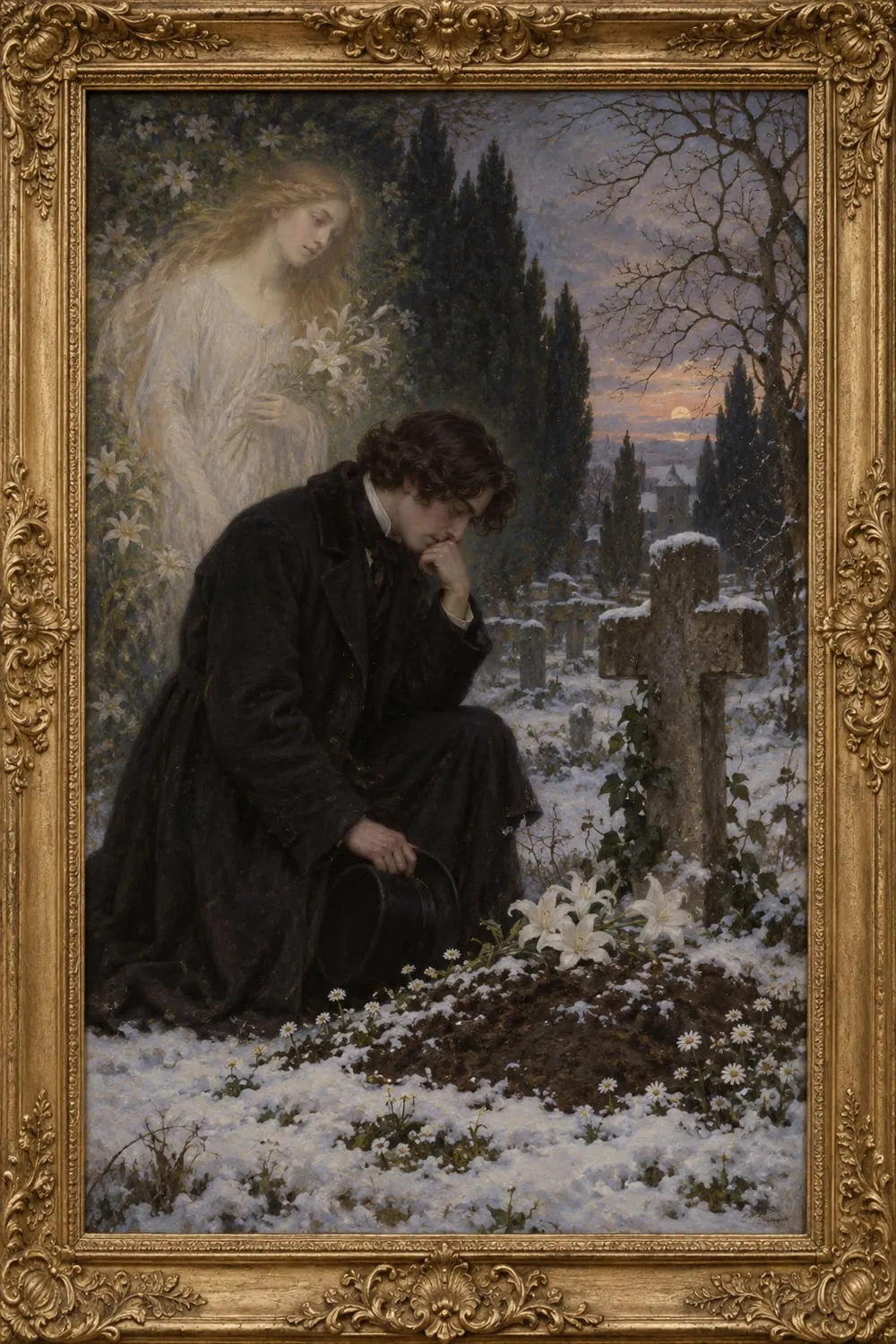
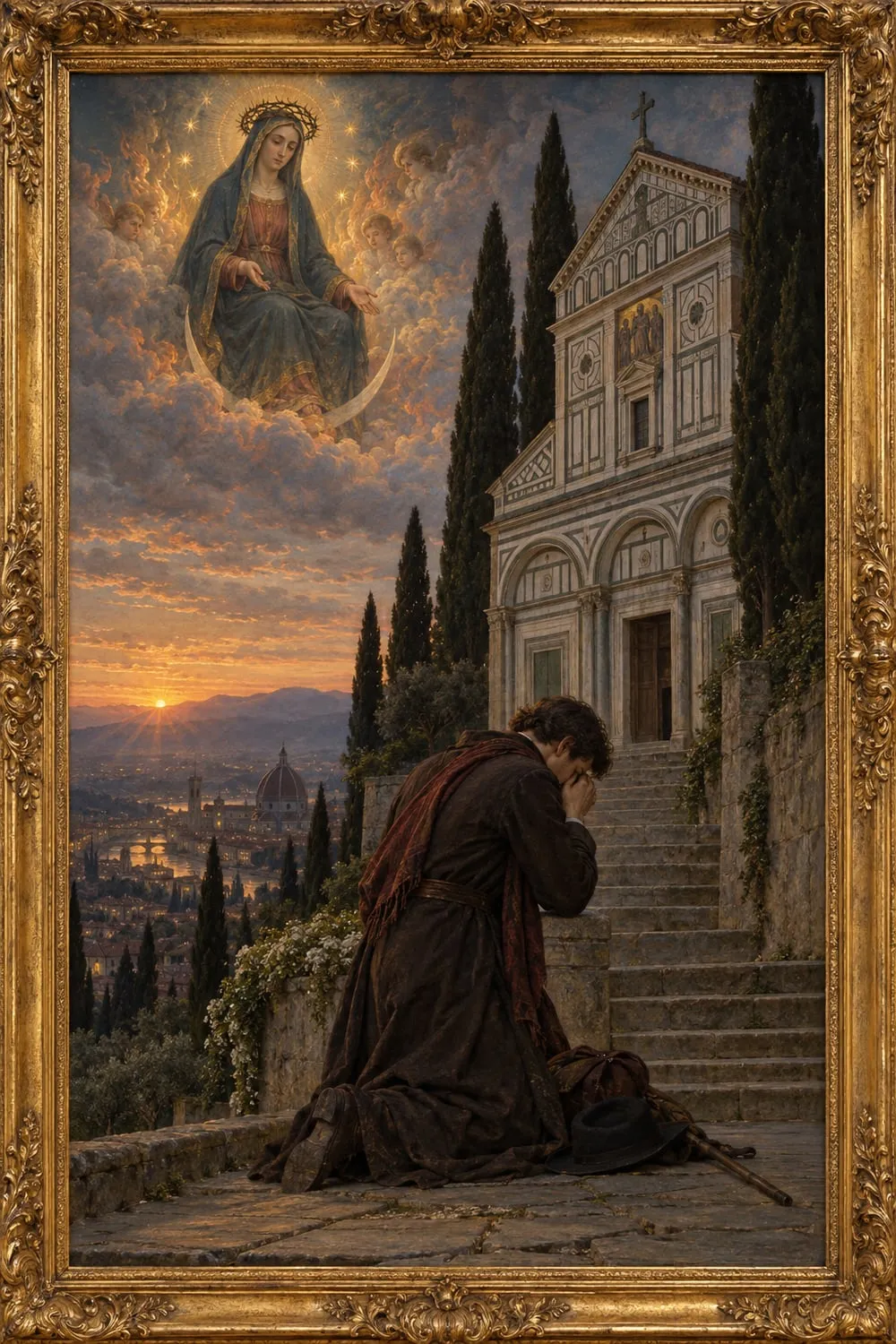
Summary
The sonnet opens with an accusation: 'Italia! thou art fallen'. The speaker admits all the signs of national greatness. Italy's 'clamorous armies' stride with glittering spears 'From the north Alps to the Sicilian tide'; the nations 'hail thee Queen' because of the gold seen in every town; and her 'myriad galleys' ride the sea 'Beneath one flag of red and white and green', the flag of a single united country. The word 'though' frames these glories, so the list only sharpens the charge of the first line.
The ninth line gathers the paradox into one cry: 'O Fair and Strong! O Strong and Fair in vain!' The speaker then turns Italy's gaze south, to Rome, whose 'desecrated town Lies mourning for her God-anointed King', and then upward to heaven. His question, 'shall God allow this thing?', is answered at once: 'some flame-girt Raphael shall come down, And smite the Spoiler with the sword of pain.'
The place name Venice, printed at the foot, puts the speaker in the north of Italy, looking towards a Rome he sees as wronged.
Characters
Italia
The fallen queen
Italy, addressed as a woman and a Queen, 'Fair and Strong' with armies, gold and fleets. The speaker admires her power but declares her fallen because of what has been done to Rome. She is told to look south to the mourning city and then heavenward to the judgement that will come.
The speaker
The accuser
A voice writing from Venice who loves Italy's beauty but condemns her conduct. He sees Rome as 'desecrated' and its Pope as a wronged king, and he ends by prophesying that an avenging angel will punish 'the Spoiler'.
Themes
Power against sacred right
Every mark of Italy's success in the first eight lines, armies, gold, fleets and a single flag, is swept aside by the line 'O Strong and Fair in vain!' For the speaker a nation is judged not by its strength but by how it treats Rome and 'her God-anointed King'. Power won at the cost of what he holds sacred is itself the fall announced in the first line.
Judgement from heaven
The poem ends not in lament but in threat. The speaker looks 'heaven-ward' and promises that 'some flame-girt Raphael shall come down, And smite the Spoiler with the sword of pain'. The archangel, armed and on fire, answers the earthly armies of the opening lines. History, in this view, will be corrected by heaven rather than by men.
Rome as a wounded city
Rome appears only briefly, but it is the centre of the poem. It is a 'desecrated town' that 'Lies mourning', like a widow or a bereaved queen. Italy is called Queen by the nations; Rome's true king is 'God-anointed'. The contrast between these two crowns, one given by the world and one by God, carries the argument of the sonnet.
Context
Italia is a sonnet in the Rosa Mystica group of Wilde's Poems (1881), with the word Venice printed at its foot. The red, white and green flag is the tricolour of the united Kingdom of Italy, and Rome's 'God-anointed King' is the Pope, who lost his rule over the city when Italian troops took it in 1870. The same flag returns, called 'hated', in Urbs Sacra Aeterna, a later sonnet in the same group.
About this edition
- Text: the complete work from Standard Ebooks, released into the public domain (CC0 1.0). We change only the layout.
- Download the EPUB of the whole book it comes from, free, for any e-reader.
- Every quotation and glossary word in these notes is checked against the text.