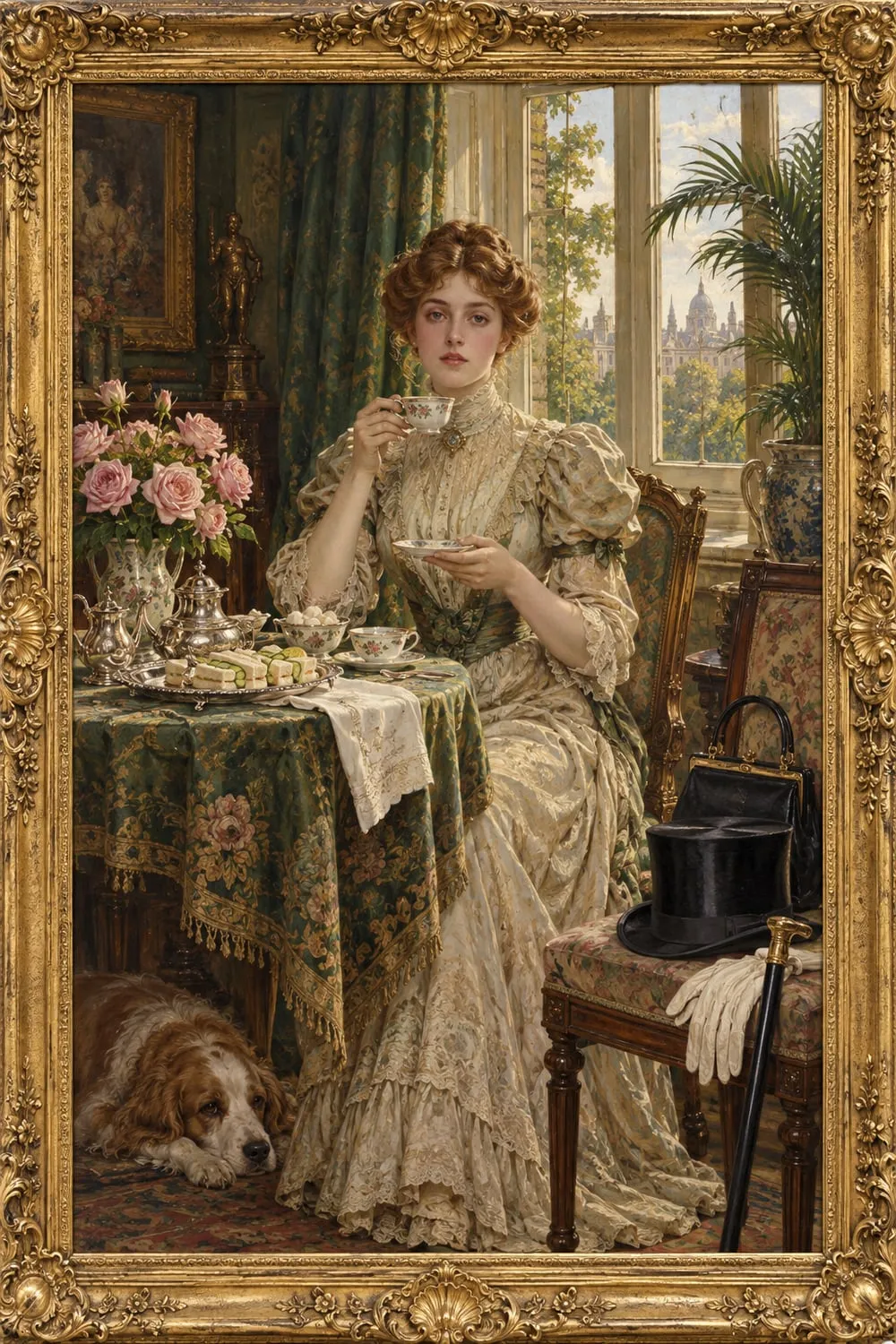
A trivial comedy for serious people
The Importance of Being Earnest
"The truth is rarely pure and never simple."
The story in brief
AI-assisted summaryJack Worthing is a respectable country gentleman and guardian to young Cecily Cardew, but in London he calls himself Ernest and blames his trips to town on an imaginary wicked younger brother of that name. His friend Algernon Moncrieff has an invention of his own, a permanent invalid called Bunbury whose relapses excuse him from dull dinners. Jack loves Algernon's cousin Gwendolen, who adores him chiefly because his name is Ernest, but her mother, Lady Bracknell, will not let her marry a man who was found as a baby in a handbag at Victoria Station.
Algernon, having overheard Jack's country address, arrives at the Manor House posing as the wicked Ernest just as Jack returns in mourning to announce Ernest's death. Cecily has been engaged to 'Ernest' in her diary for months, and she accepts Algernon at once. When Gwendolen arrives, both young women believe they are engaged to Ernest Worthing, and over a frosty tea the deception collapses. Both men book the rector to christen them Ernest.
Lady Bracknell follows her daughter to the country and warms to Cecily on hearing of her fortune, but Jack refuses to let Cecily marry unless he may marry Gwendolen. A chance mention of Miss Prism unlocks the past: twenty-eight years earlier she left a baby in her handbag at Victoria. That baby is Jack, Algernon's elder brother, and the Army Lists show that he was christened Ernest after all.
Key themes
"All women become like their mothers. That is their tragedy. No man does. That's his."
Related works
Explore more of Wilde's writing Lady Windermere's FanA young wife suspects her husband of an affair with a woman of doubtful reputation, and one birthday ball and a forgotten fan decide everything. Wilde's first society comedy.Read more
  A Woman of No ImportanceA charming, cynical lord offers a young man a career, not knowing the young man is his own son. A comedy of manners with a hard question about how women are judged.Read more
  An Ideal HusbandA rising politician built his fortune on a secret, and a clever adventuress arrives in London to sell it back to him. Blackmail, marriage and public virtue under pressure.Read more
 Summary
AI-assisted summaryIn his flat in Half-Moon Street, Algernon Moncrieff eats the cucumber sandwiches meant for his aunt, Lady Bracknell, while his manservant Lane explains why the servants in a bachelor's household drink the champagne. A friend Algernon knows as Ernest Worthing arrives and announces that he has come to town to propose to Algernon's cousin, Gwendolen Fairfax. Algernon produces a cigarette case the friend left behind, inscribed from 'little Cecily' to 'her dear Uncle Jack', and demands an explanation.
The friend confesses that he is Jack in the country, where he is guardian to Cecily Cardew, granddaughter of the late Thomas Cardew who adopted him. Because a guardian must keep up a high moral tone, he has invented a disreputable younger brother called Ernest who lives in the Albany and whose scrapes call him up to town. Algernon is delighted: he is a Bunburyist himself, with an imaginary invalid friend, Bunbury, whose relapses let him slip away to the country whenever he chooses. Jack says he will kill off Ernest if Gwendolen accepts him.
Lady Bracknell and Gwendolen arrive. Lane gravely reports that there were no cucumbers in the market, and Algernon excuses himself from his aunt's dinner because Bunbury is ill again. While he takes Lady Bracknell into the music-room, Jack proposes, and Gwendolen accepts him before he has quite asked, explaining that her ideal has always been to love someone called Ernest. Lady Bracknell returns, sends her daughter down to the carriage and questions Jack from her list of eligible young men. His income, politics and town house pass, but when he admits that he was found in a handbag in the cloakroom at Victoria Station, she advises him to acquire some relations and sweeps out. Gwendolen slips back for his country address, which Algernon quietly writes on his shirt-cuff before telling Lane that he is going Bunburying.
In the garden of the Manor House at Woolton, in Hertfordshire, the governess Miss Prism tries to keep Cecily at her German grammar, mentions that she once wrote a three-volume novel whose manuscript was lost, and goes for a stroll with the rector, Canon Chasuble. The butler, Merriman, announces Mr Ernest Worthing. Algernon, playing the wicked brother, charms Cecily, who tells him that Uncle Jack means to send him to Australia. Jack then arrives early, dressed in deepest mourning, and tells Miss Prism and Chasuble that his brother Ernest has died in Paris of a severe chill. He asks Chasuble to christen him that afternoon. Cecily comes out of the house with the news that Ernest is in the dining-room, and Jack is made to shake his 'brother' by the hand.
Jack orders the dogcart to take Algernon away and goes to change his clothes. Left alone with Cecily, Algernon declares his love and learns that she has been engaged to him for three months: she accepted him on 14 February, broke it off in March, bought a ring in his name, wrote his love letters for him and recorded it all in her diary. She loves him above all for the name Ernest, so he hurries off to arrange his own christening. Gwendolen then calls to see Jack. The two young women swear friendship, discover that each is engaged to Ernest Worthing, and fight a war of manners over tea, with sugar and cake as weapons.
Jack and Algernon walk in on the quarrel, and each young woman unmasks the other's suitor. Cecily names Jack as her guardian, John Worthing, and Gwendolen names Algernon as her cousin, Algernon Moncrieff. The girls embrace as sisters and ask where Ernest is, and Jack admits that he has no brother at all. They sweep into the house. Left alone, the men squabble over the muffins and discover that both have arranged with Chasuble to be christened Ernest that afternoon.
Indoors, Gwendolen and Cecily accept the men's explanations but hold out over their Christian names, until both men declare they will be christened. Lady Bracknell arrives, having followed Gwendolen by luggage train, and Algernon announces that Bunbury is dead, 'quite exploded'. She quizzes Jack about Cecily, and her doubts vanish when she hears of a hundred and thirty thousand pounds in the Funds. Jack now refuses to let Cecily marry Algernon, whom he calls untruthful, and reveals that under her grandfather's will Cecily does not come of age until she is thirty-five. He offers a bargain: he will consent the moment Lady Bracknell lets him marry Gwendolen. She refuses and prepares to leave.
Chasuble comes in to say that the christenings are ready and that Miss Prism is waiting for him. At the name, Lady Bracknell summons her and demands to know where the baby is. Twenty-eight years earlier Miss Prism left Lord Bracknell's house in Upper Grosvenor Street with a baby boy in a perambulator and never came back; the perambulator was found holding the manuscript of a three-volume novel. Miss Prism confesses that in a moment of mental abstraction she put the manuscript in the perambulator and the baby in her handbag, which she left in the cloakroom at Victoria Station, on the Brighton line. Jack rushes upstairs and returns with the handbag, which she identifies as hers.
Jack embraces Miss Prism as his mother, but she is unmarried and points him to Lady Bracknell, who reveals that he is the son of her sister, Mrs Moncrieff, and so Algernon's elder brother. As the eldest son he was christened after his father, a General, and the Army Lists show that the General's Christian names were Ernest John. Jack's name is Ernest after all. Chasuble embraces Miss Prism, Algernon embraces Cecily and Jack embraces Gwendolen, and when Lady Bracknell complains of triviality, Jack replies that he now understands the vital Importance of Being Earnest.
Act by act
AI-assisted summaryJack Worthing, a justice of the peace, and his friend Algernon Moncrieff lead a cast that includes Algernon's aunt Lady Bracknell, her daughter Gwendolen Fairfax, Jack's ward Cecily Cardew, Cecily's governess Miss Prism and the rector, Canon Chasuble. Lane is Algernon's manservant and Merriman the butler at Jack's country house. Act I is set in Algernon's flat in Half-Moon Street, in the West End of London. Acts II and III move to the garden and then the drawing-room of the Manor House at Woolton, in Hertfordshire.
Jack Worthing, known in town as Ernest, calls on Algernon Moncrieff meaning to propose to Algernon's cousin Gwendolen. A cigarette case exposes his double life, and Algernon confesses to an invented invalid of his own, Bunbury. Gwendolen accepts Jack because she believes his name is Ernest, but Lady Bracknell's interview ends in outrage when he admits he was found in a handbag at Victoria Station. Algernon secretly notes Jack's country address and plans to go Bunburying.
In the garden of the Manor House, Algernon arrives posing as Jack's wicked brother Ernest, just before Jack returns in mourning to announce Ernest's death. Cecily reveals that she has been engaged to 'Ernest' for months in her diary and accepts Algernon. Gwendolen arrives, and the two young women, each engaged to Ernest Worthing, fight over tea until both men are unmasked. Left alone, Jack and Algernon quarrel over the muffins and their rival christenings.
Gwendolen and Cecily forgive the men, who promise to be christened Ernest. Lady Bracknell arrives, approves Algernon's match once she learns of Cecily's fortune, but still refuses Jack. Canon Chasuble's mention of Miss Prism exposes an old scandal: twenty-eight years ago she left a baby in a handbag at Victoria Station. The baby was Jack, who proves to be Algernon's elder brother, christened Ernest after his father.
Characters
AI-assisted notes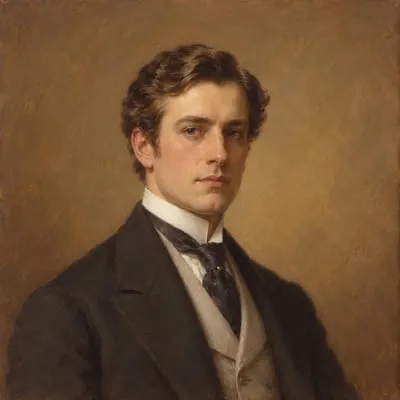
Jack Worthing
The man with two names
A justice of the peace with a country house in Hertfordshire and guardian to Cecily Cardew, Jack was found as a baby in a handbag at Victoria Station and adopted by Thomas Cardew. In the country he keeps up a high moral tone; in town he is Ernest, the wicked brother he invented. He loves Gwendolen, loses all patience with Algernon, and learns at the end that he is Algernon's elder brother and was christened Ernest all along.
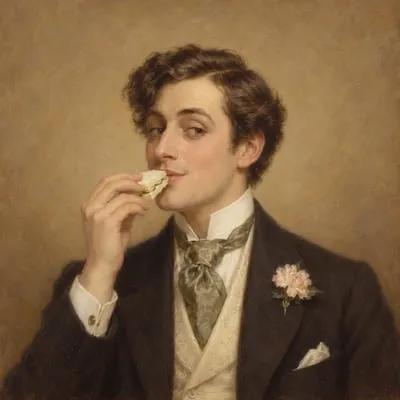
Algernon Moncrieff
The dandy Bunburyist
Lady Bracknell's nephew, who lives in Half-Moon Street, tears up what look like bills after a glance at the envelopes, and eats every sandwich and muffin within reach. He invented Bunbury, a permanent invalid, to escape tiresome engagements, and treats Bunburying as an art. Having overheard Jack's country address, he goes down to Woolton as the wicked Ernest and falls in love with Cecily within the afternoon. He talks in polished epigrams and is never at a loss, even when found out.
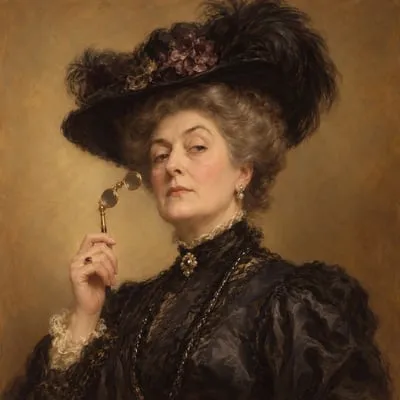
Lady Bracknell
Society's stern examiner
Gwendolen's mother and Algernon's Aunt Augusta, she keeps a list of eligible young men and interviews Jack with notebook and pencil. She rejects him for having been found in a handbag, yet warms to Cecily the moment she hears of a hundred and thirty thousand pounds, while declaring that she does not approve of mercenary marriages. Every opinion she gives is delivered as law. In the last act it is she who recognises Miss Prism and reveals that Jack is her sister's son.
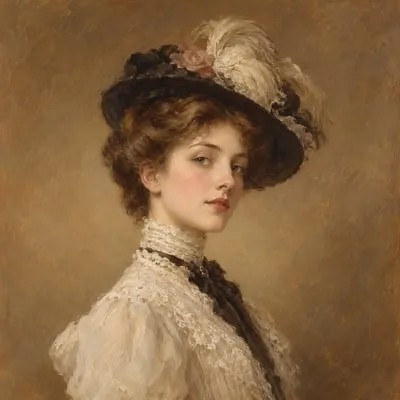
Gwendolen Fairfax
In love with a name
Lady Bracknell's daughter and Algernon's cousin, poised, fashionable and entirely sure of herself. She tells Jack she was destined to love him because his name is Ernest, accepts him before he has managed to propose, and follows him to the country against her mother's wishes. Her tea-table duel with Cecily is the comic peak of Act II. Near the end she sums herself up: 'I never change, except in my affections.'
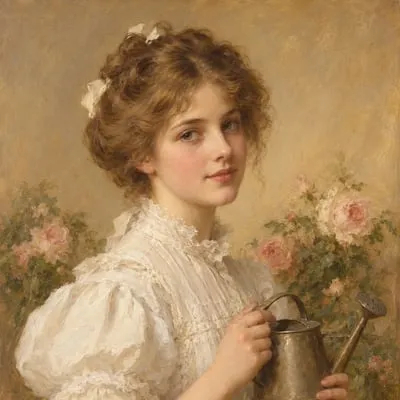
Cecily Cardew
The romantic country ward
Thomas Cardew's granddaughter and Jack's eighteen-year-old ward, who finds German unbecoming and would rather water the roses. Fascinated by Jack's wicked brother, she has invented a whole engagement to him in her diary, complete with a ring, a bangle and letters she wrote herself. She accepts Algernon at once and holds her own against Gwendolen over tea. She has a fortune of a hundred and thirty thousand pounds, and under her grandfather's will she does not come of age until thirty-five.
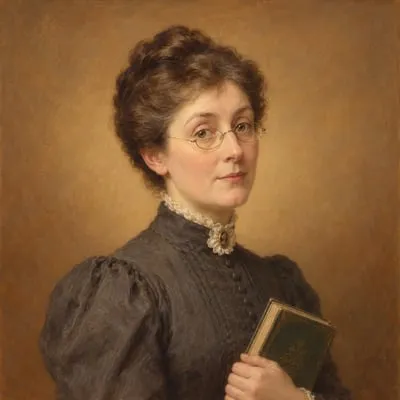
Miss Prism
The governess with a past
Cecily's governess, a stern moralist who says 'As a man sows so let him reap' and urges Canon Chasuble to give up his single life. She once wrote a three-volume novel whose manuscript, she says, was abandoned. Twenty-eight years earlier, in charge of a baby from Lord Bracknell's house, she absent-mindedly put the manuscript in the perambulator and the baby in her handbag, then left the bag at Victoria Station. Her Christian name is Laetitia.
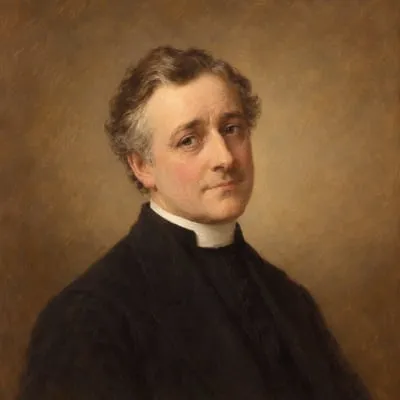
Canon Chasuble
The learned celibate rector
The Rev. Canon Chasuble, D.D., is the rector of the parish at Woolton, fond of classical allusions and quick to compare Miss Prism to Egeria. His sermon on the manna in the wilderness can be adapted to any occasion, from harvest celebrations to christenings. He agrees to christen both Jack and Algernon on the same afternoon and holds that the Primitive Church was against matrimony, yet at the final curtain he embraces Miss Prism, who calls him Frederick.
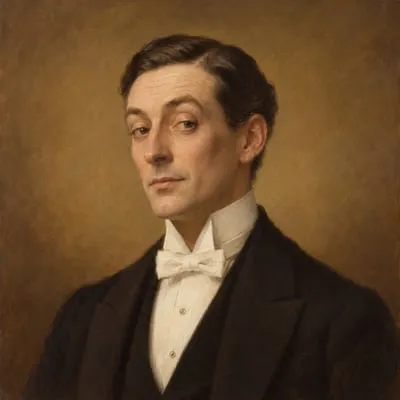
Lane
Algernon's unflappable manservant
Algernon's manservant in Half-Moon Street, who accounts for the champagne drunk in the flat by 'the superior quality of the wine'. He has been married once, 'in consequence of a misunderstanding'. When Algernon has eaten Lady Bracknell's cucumber sandwiches, Lane gravely reports that there were no cucumbers in the market, 'Not even for ready money.' His dry replies, such as 'It never is, sir', are a match for his master's wit.
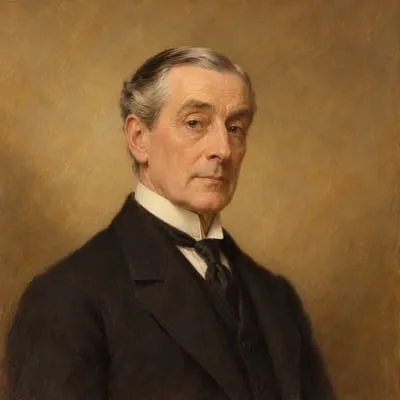
Merriman
The Manor House butler
The butler at Jack's house in Woolton. He announces Mr Ernest Worthing, unpacks Algernon's three portmanteaus, dressing-case, two hatboxes and large luncheon-basket in the room next to Jack's, and keeps the dogcart waiting while Cecily and Algernon come to an understanding. His arrival with the tea things forces Gwendolen and Cecily to keep their quarrel polite, and his loud cough in Act III warns the embracing couples that Lady Bracknell has arrived.
Themes
AI-assisted notesNames and identity
The whole plot turns on a name. Gwendolen tells Jack in Act I that her ideal has always been to love someone called Ernest, because 'There is something in that name that inspires absolute confidence', and Cecily says almost the same words in Act II. Neither woman asks whether the man is earnest in character, and both men respond by booking a christening rather than telling the truth. The joke closes when the Army Lists show that Jack was christened Ernest John all along, so that he has, as he says, been 'speaking nothing but the truth' without knowing it.
Double lives and Bunburying
Both heroes lead double lives for convenience. Jack invents a wicked brother so that he can escape to town; Algernon invents an invalid friend so that he can escape to the country. Algernon gives the habit a name, Bunburying, and treats it almost as a philosophy: 'one must be serious about something, if one wants to have any amusement in life.' The play punishes neither of them. When the two fictions collide in the garden at Woolton, both inventions are killed off, Ernest by a severe chill in Paris and Bunbury by being 'quite exploded', yet the deceivers still win the women they deceived.
Marriage and money
Marriage in the play is a matter of lists and incomes. Lady Bracknell interviews Jack with notebook and pencil, approving his smoking, his ignorance and his investments until the handbag ends the interview. In Act III she has doubts about Cecily until she hears of a hundred and thirty thousand pounds in the Funds, after which the girl's profile shows 'distinct social possibilities'. Moments later she announces that she does not approve of mercenary marriages. Even Lane has a view: in married households, he observes, the champagne is rarely of a first-rate brand.
Class and manners
Upper-class manners in the play are a performance that barely covers the claws. Algernon complains that the lower orders do not set a good example, while Lane drinks the champagne and lies gravely about the cucumbers. Lady Bracknell is glad that education has no effect in England, since otherwise it might lead to 'acts of violence in Grosvenor Square'. The tea scene in Act II turns politeness into a weapon: Gwendolen says she has never seen a spade, and Cecily answers by loading her cup with sugar and serving her cake instead of the bread and butter she asked for.
Seriousness and triviality
The subtitle promises a trivial comedy for serious people, and the characters turn the two words inside out. Jack thinks Algernon is 'hardly serious enough'; Algernon later retorts that Jack has 'such an absolutely trivial nature' because he is serious about everything. People are grave about food and clothes and light about death: Algernon eats muffins calmly so that the butter will not get on his cuffs, while Jack's deep mourning for a brother who never existed is played for laughs. Gwendolen states the rule in Act III: 'style, not sincerity is the vital thing.'
Fiction and romance
The play mocks the novels and romances its characters live by. Cecily invents an entire engagement in her diary, with a ring, a bangle, a quarrel and letters she wrote herself, and calls the diary 'meant for publication'. Miss Prism explains that in fiction 'The good ended happily, and the bad unhappily', and her own lost three-volume novel turns out to be the cause of the whole plot, since she put the manuscript in the perambulator and the baby in the handbag. The ending, with its foundling, its long-lost brother and its recognised handbag, parodies exactly that kind of story.
Quotes
"To lose one parent, Mr. Worthing, may be regarded as a misfortune; to lose both looks like carelessness."
Lady Bracknell · Act I
"All women become like their mothers. That is their tragedy. No man does. That's his."
Algernon · Act I
"The good ended happily, and the bad unhappily. That is what Fiction means."
Miss Prism · Act II
"I never travel without my diary. One should always have something sensational to read in the train."
Gwendolen · Act II
"In matters of grave importance, style, not sincerity is the vital thing."
Gwendolen · Act III
"On the contrary, Aunt Augusta, I've now realised for the first time in my life the vital Importance of Being Earnest."
Jack · Act III
"The truth is rarely pure and never simple."
Algernon · Act I
"Memory, my dear Cecily, is the diary that we all carry about with us."
Miss Prism · Act II
Context
AI-assisted notesWilde wrote The Importance of Being Earnest in the summer of 1894 while he was staying at Worthing, the seaside town that gives Jack his surname: Thomas Cardew names the foundling after the destination on the first-class ticket in his pocket. Wilde subtitled the play 'A Trivial Comedy for Serious People', which describes its habit of treating trivial things with great seriousness and serious things as trifles.
The play was first performed at the St James's Theatre, London, on 14 February 1895, the same date on which Cecily says she accepted her imaginary Ernest. It was produced by George Alexander, who also played Jack. The Marquess of Queensberry planned to disrupt the first night but was refused entry.
Only weeks later, in April 1895, Wilde was arrested. His name was removed from the playbills and the production soon closed. When the play was published in 1899 by Leonard Smithers, it was credited not to Oscar Wilde by name but to 'the Author of Lady Windermere's Fan'.
First performed at the St James's Theatre, London, on 14 February 1895; published 1899.
About this edition
- Text: the complete work from Standard Ebooks, released into the public domain (CC0 1.0). We change only the layout.
- Download the EPUB, free, for any e-reader.
- Audiobook: a full-cast reading by volunteers for LibriVox, in the public domain.
- The summaries, character notes, themes and glossary were written with AI from the text and then checked: every quotation and every glossary word is matched against the text.